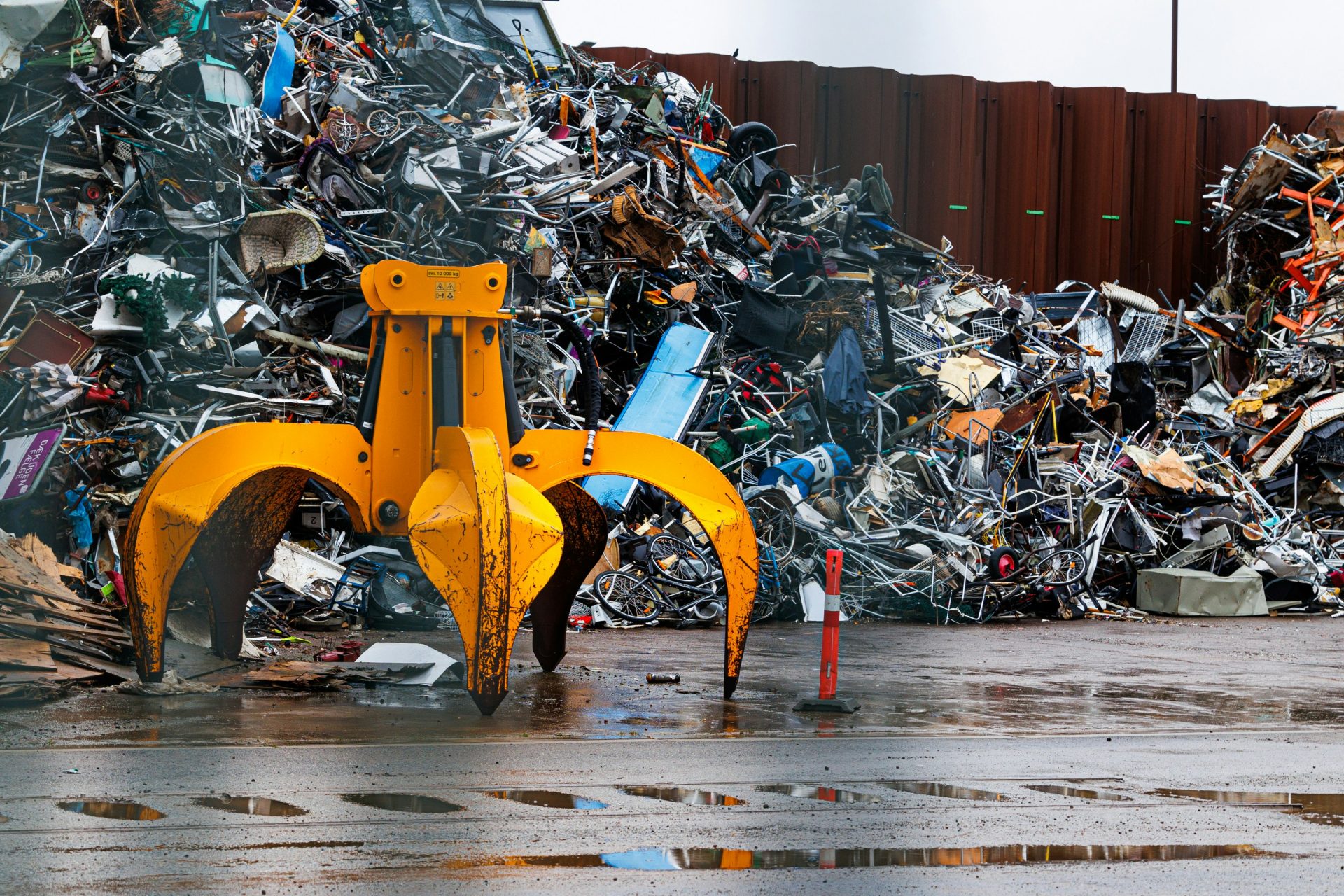
The University of Kent (part of the London and South East University Group) is set to support the UK’s first dedicated waste and recycling robotics adoption hub as part of a £40 million government scheme.
The National Waste and Recycling Robotics Adoption Hub (NORAH), funded by Innovate UK and based in the Southeast of England, is one of eight Robotic Adoption Hubs to be rolled out across the UK to offer advice and support to businesses and public services looking to use the latest technologies and swich to automation.
Led by Kingston University, the £3.6 million NORAH project will draw on robotics expertise at Kent to help UK waste and recycling sites test and adopt robots so they recover more materials, send less to landfill and create skilled jobs – accelerating deployment of automation in one of the most technically challenging industrial environments.
Fewer than five per cent of UK waste facilities have adopted automation, due to some robotic systems struggling to operate reliably in waste conditions where materials are often contaminated, heterogeneous and deformable. As a result, operators cannot predict performance, quantify return on investment or confidently deploy systems.
The hub will address this gap by enabling robotics systems to be tested, validated and implemented on real waste streams. Initial focus is on complex materials such as textiles, mixed recyclables and soft-material waste, where current systems perform least reliably but where gains in recovery and productivity are greatest.
Using advanced sensing systems, multi-arm robotic sorting cells and digital simulation, technologies will be validated on live contaminated waste streams, generating measured data on classification accuracy, throughput, contamination handling and material recovery. This is combined with site-specific economic modelling to provide payback and investment cases, reducing uncertainty and enabling faster adoption.
Services include:
- Real testbeds using contaminated, heterogeneous waste streams, including textiles, mixed recyclables and deformable materials
- Independent benchmarking using operator-specific waste samples, generating measured performance data rather than vendor-derived metrics
- Integration support within Materials Recovery Facilities and legacy infrastructure, including constrained layouts and variable feedstock
- Training and workforce transition programmes focused on safe operation in contaminated waste environments
- Innovation programmes addressing sector-specific challenges such as mixed fibre sorting, contamination removal and automated disassembly
- Access to waste operators, local authorities and commercial facilities, providing direct routes to deployment and live operational validation
The NORAH project will see researchers from the Cognitive Robotics and Autonomous System (CoRAS) lab in the School of Computing at Kent work with a consortium of partners including the West London Waste Authority and robotic developers, waste operators, local authorities and national bodies. The hub will combine deployment with research capability and policy alignment, ensuring solutions are aligned to industry needs, regulatory requirements and scalable deployment pathways – enabling a wider uptake of robotics across the waste sector.
Dr Giovanni Masala, Senior Lecturer in Computer Science in the School of Computing, will be leading on the project at Kent alongside Lecturer in Artificial Intelligence, Dr Ioanna Giorgi, and Senior Lecturer, Dr Daniel Soria.
Dr Masala said: “By replacing assumptions with validated operational data, we intend to reduce deployment risk, shorten adoption timelines and enable wider uptake of robotics across the waste sector. Our target is to support over 150 organisations and deliver operational deployments by 2030, creating a national evidence base for robotics in waste and establishing a scalable model for adoption across other complex industrial sectors.”
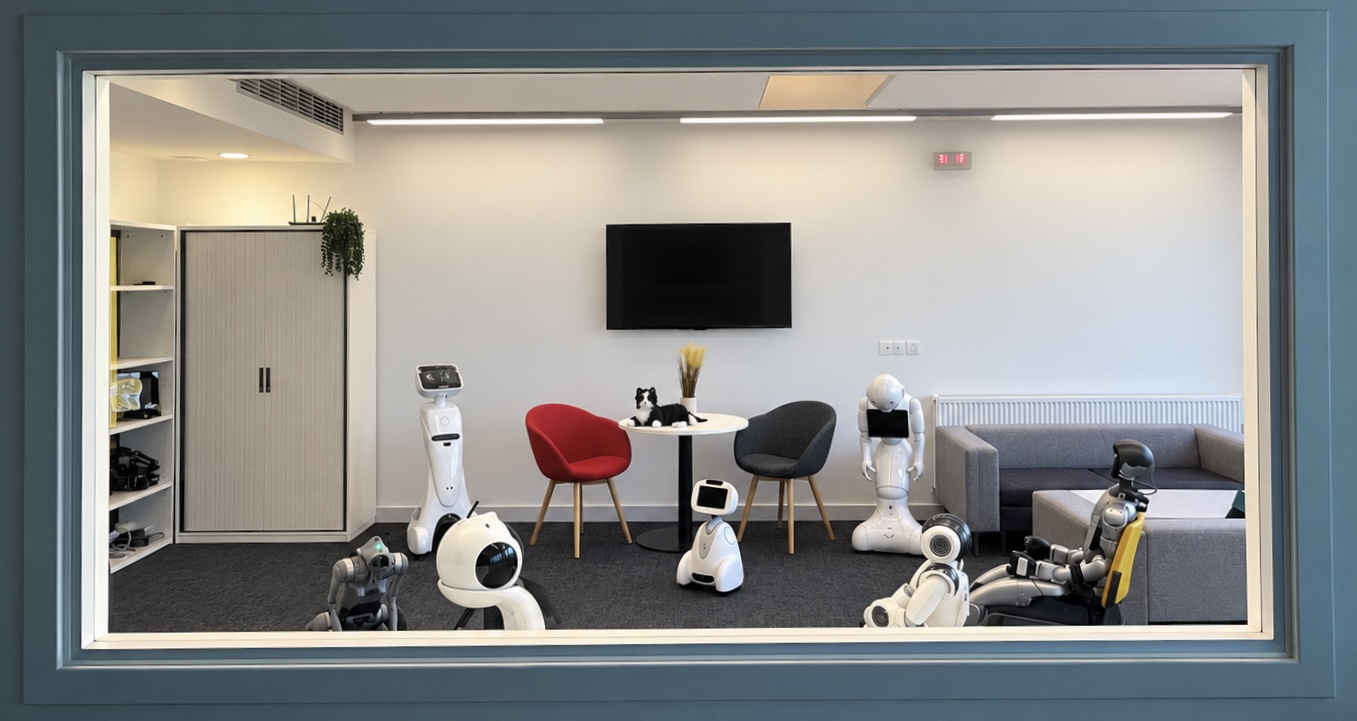
Researchers in the CoRAS laboratory will help NORAH develop recycling robots that can operate reliably in changing and unpredictable conditions. The laboratory has a range of specialist robotic platforms, including humanoid robots and collaborative robots, or “cobots”, designed to work alongside people. These platforms are useful for exploring how robots see, move, adapt and interact with humans.
The team uses computer vision to help robots understand the materials they encounter, and digital-twin simulations (or virtual copies of equipment) to test systems before they are deployed. By providing additional robots and facilities for testing, the laboratory will help improve the reliability and robustness of recycling technologies.