Research

Research
Our innovative and cutting edge research develops the science that underpins conservation and tackles the more applied questions of how biodiversity can survive in this ever more crowded world. This work focuses on a range of issues covering biodiversity and human well-being, deforestation, defaunation and restoration, designing conservation area and ecological networks, human-wildlife coexistence, landscapes and livelihoods, species monitoring and conservation, valuing nature and ecosystem services, and wildlife trade and sustainable use.
DICE is committed to high-quality, practical, applied conservation research. In the 2021 Research Excellence Framework (REF), we ranked 1st in the UK for our publications in the Geography & Environmental Studies panel.
Over the past 35 years, DICE has been awarded over £30 million for conservation research, including grants from UK Research and Innovation (including NERC, ESRC, and Future Leader Fellowships), the European Research Council, and the Leverhulme Trust. In August 2024 we received £8.3 million from Research England’s Expanding Excellence in England fund to design and implement conservation solutions in multifunctional land and seascapes. This project, E3 Sharing Space for Nature, informs habitat recovery locally and across the globe.
Details of our current projects and research hubs can be found further down the page.
Research Hubs
-

E3 Sharing Space for Nature
A new research initiative, which began in 2024, funded by Research England.
-
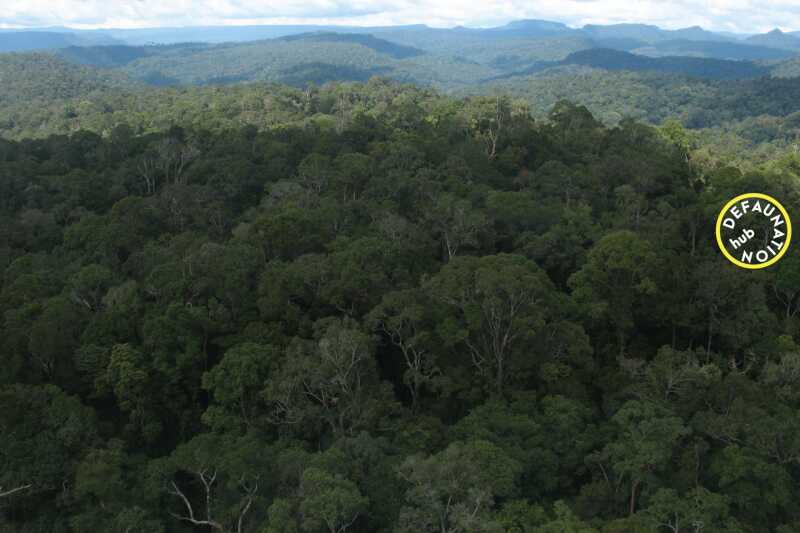
Tropical Defaunation Hub
Launched in 2020 to study wildlife population change in Indonesia.
-

Systematic Conservation Planning Hub
A home for research and practice on systematic conservation planning.
-

BIO-WELL
An open access tool for practitioners to quantify the effects of biodiversity on wellbeing.


Current Research Projects
Funder: Leverhulme Trust
Global legal wildlife trade is estimated at $249billion pa, while the illegal trade (IWT) exceeds $20billion. Illegal activities threaten species, spreads diseases, and fuels crime. Efforts to combat IWT, following the London Declaration on IWT, focus on law enforcement, strengthening laws, alternative livelihoods, and reducing demand, mainly in Africa and Southeast Asia. However, demand-side regions like Europe and North America are neglected. Trade regulations can create bureaucratic barriers, deterring legal trade and potentially driving consumers to illegal markets. This interdisciplinary study aims to understand how regulations influence and potentially drive illegal trade, thus improving policy frameworks to better protect wildlife.
Funder: British Academy
Riverside communities in the Amazon face growing threats from illegal fishing, deforestation, and organised crime that undermine livelihoods, food security, and biodiversity. This project pilots a drone-based surveillance system to enhance local conservation efforts while reducing the personal risks and economic costs linked to monitoring. By training local government officials and community leaders to operate drones and interpret aerial footage, the team aim to deter illicit activities, safeguard fish stocks, and conserve floodplain ecosystems. Collaborating with NGOs and local agencies, they will assess the system’s impact on safety, economic resilience, and resource management. This will inform policymakers of the feasibility and scalability of accessible technology in strengthening fisheries management and protecting vulnerable environments. The project is led by Dr Juliana Camargo at Fundacao Getulio Vargas, Brazil.
Funder: ESRC
The core aim of Michaela’s research is to explore how diverse communities—particularly those often excluded from decision-making—experience, perceive, and navigate food systems. Michaela uses the concept of foodscapes alongside participatory visual methods to illuminate these experiences, emphasizing the need to centre local perspectives in building healthier, more sustainable, and equitable food systems.
Prof Groombridge, Dr Winder. Co-Is: Prof van Oosterhout & Dr Wu (UEA). Partners: University of Copenhagen, Centre for Genomic Regulation, University of Sydney, Mauritian Wildlife Foundation, Zhejiang University, Murdoch University, Seychelles Islands Foundation, Durrell.
Funder: NERC
We aim to identify genomic and environmental predictors of parrot responses to viral infection and to assess the risk of viral disease outbreaks across parrot species, by investigating genomic mechanisms underlying resistance, tolerance and susceptibility to viral disease. Our focal species is the Mauritius parakeet, which declined to <20 individuals in the 1980s but has now recovered to >800 birds, surviving four Beak and Feather Disease virus (BFDV) outbreaks. We have 30 years of data on fitness, infection history, clinical symptoms and blood samples. We will sequence whole-genome for hundreds of individuals and design deep learning models to identify genomic signatures associated with host resistance.
Dr Stephanie Brittain
Funder: Darwin Initiative
The project is led by Dr Jorgelina Marino at the Department of Biology, University of Oxford.
The project website explains that ‘…Environmental degradation in the Ethiopian highlands perpetuates poverty among local communities depending on natural resources. To break this loop, locally desired and suitable livelihoods are needed. This project supports sustainable livelihoods, such as cultivation of native “guassa” grasses and production of highland honey, and participatory processes to strengthen traditional governance and capacity for co‐management of natural resources in Community Conservation Areas. Thus, local livelihoods will be improved, and Afroalpine grasslands protected, including endemic small mammals and endangered Ethiopian wolves…’
For more information visit the project website
Dr Daniel Ingram, Dr Joshua Bauld, Dr Tally Yoh
Funder: Future Leader Fellowship Scheme
Across the tropics, the meat of >2,000 species of wild animal are consumed. In many rural areas, people living close to wildlife rely on hunting wild animals as an essential source of food, income, and sometimes cultural identity. Yet, there is limited knowledge about wildlife consumption patterns among urban residents. This fellowship integrates several disciplines to:
- Investigate the public attitudes towards wildlife consumption
- Determine wildlife consumption patterns and what shapes decision-making by urban wildmeat consumers
- Analyse trends in zoonotic disease risk and wildlife consumption to identify priority areas for intervention in tropical African countries.
By identifying the drivers underpinning urban wildlife consumption, appropriate actions can be taken to improve the sustainability of wildlife use, protecting wildlife and the ecosystems and resources that millions of people rely on.
Research at DICE
Follow our LinkedIn newsletter for monthly roundups of our latest research.
Featured Research
Find out more about the work we are involved in