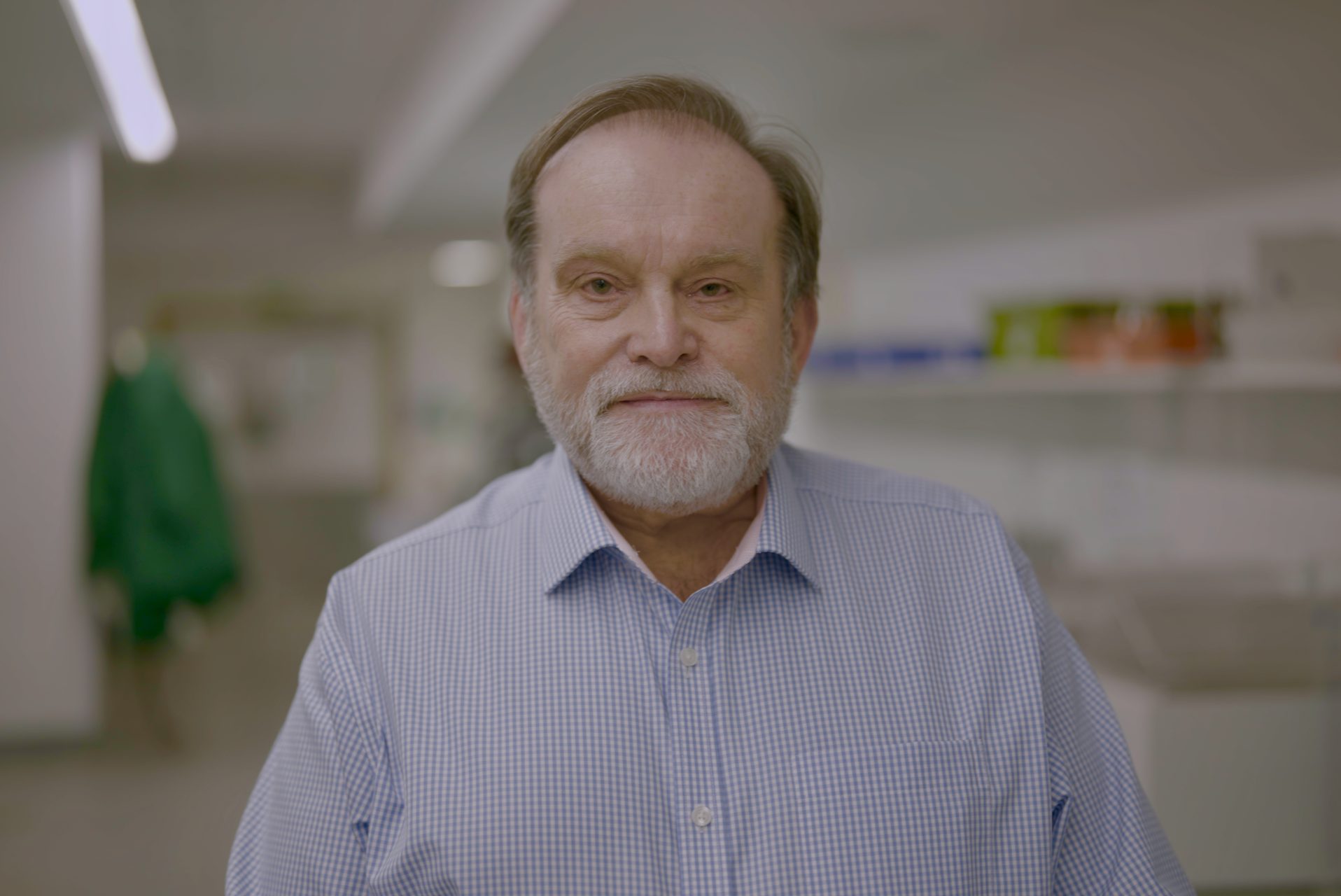
Andrew Langley, Senior Lecturer in Forensic Science at the School of Natural Sciences, is featuring in new Channel 4 documentary series Crime Scene Cleaners, which follows professional biohazard cleaners attending crime scenes after forensic evidence has been taken.
Andrew has over 35 years of experience in crime scene examination. For the last 15 of those years he was responsible for forensic response management to many high-profile homicide and unexplained death investigations. His industry profile led to him being the forensic lead at the UK mortuary following the Tunisian beach attack in 2015 and managing the forensic response to the identification process following the devastating Grenfell Tower fire in 2017.
Crime Scene Cleaners shows crime scene clean-up processes through the body-cams worn by cleaners, while discussing the forensic science behind it and the necessary precautions for those cleaning. Producers called upon Andrew to provide his expertise and analyse the crime scenes in the series. He gave his opinion on what he interpreted might have happened in the scenes and explained how he came to the conclusions that he did.
Here Andrew tells us more about crime scene examination, Kent’s impressive forensic facilities and his advice for students looking at a career in forensics…
What can viewers expect to learn from you in your contribution to Crime Scene Cleaners?
How a Crime Scene Examiner assesses a crime scene visually. They may also learn what can be inferred from what they see and how those inferences might suggest a fuller examination strategy.
Cleaning up crime scenes is a specialist task, what is one thing that you think would surprise people about the complexity of it?
Cleaning Crime Scenes is not something that I did, although I did ask others to do it. It can be very complex as it isn’t just cleaning up bodily fluids – some of the chemicals that I would use in examining a crime scene are quite harmful in themselves and difficult to remove. Sometimes it can be a case of removing everything that can be taken away from a building, including doors, frames, skirting etc and just replacing it with new.
For example, if you examine a car for fingermarks using Cyanoacrylates (Superglue), as it is a vapour it can’t be effectively removed because it goes into all the voids and components, and the car will require destruction.
Is crime scene cleaning standard procedure and the Police’s responsibility?
No, whilst crime scene cleaning clearly does happen, it has been more public and visible in the US and the services carried out in the UK have generally been more discreet and less structured. The Police in the UK have no responsibility to clean a crime scene and that usually falls to the owner of the property. Clearly on some occasions they do, but it’s not their legal responsibility which often comes as a surprise.
When teaching students at Kent, do they learn from you how to analyse crime scenes like we see you doing in the series?
Yes, but of course with more of a practical, active participation approach. As part of their studies, Kent students learn about the process of crime scene assessment, and the methods used to visualise and recover evidence safely and securely. They also learn about the toxicity and usage implications of the common chemicals and methods used.
The University has a crime scene house for students to learn practically about the forensics of a crime scene, how valuable is this for a future career in forensics?
We are fortunate at Kent in that we have a Crime Scene House, a taphonomy site, a Crime Scene Wood and several vehicles that are used by all our students. It does allow us to add some realism into our teaching and Forensic practical work, even if that realism is just learning how to cope with rain and freezing temperatures! The facilities are maintained and cleaned by our fantastic technical team.
There is a vast difference between learning about techniques in a lecture theatre or a laboratory and working in a realistic environment where you are wearing Crime Scene PPE and have neither a desk to rest on, or a seat.
It’s obviously realistic as following on from some local media enquiries, we now post signs during practical work explaining that it is a teaching exercise and not a real murder!
What inspired you to have a career in forensics?
I started my career a long time ago, long before any of the CSI TV shows appeared. I hadn’t given it a thought as like many I assumed that it was a function carried out by Police Officers, and I knew that that career wasn’t for me. I had an opportunity to visit a Police station and met a SOCO (Scenes of Crime Officer) I was surprised to learn that he was a civilian employed by the Police, and I was fascinated by what he did. It was a chance to really make a difference, using science to answer the questions that everyone wants to know. What I loved was that you generally had no idea what you would be dealing with every time you went to work. Sometimes it was burglary and vehicle crimes, but sometimes it was something far more serious and then you would have no idea when you would be back home! That anticipation remained throughout my career as a progressed to a role where I only dealt with the most serious incidents and situations.
In 2017 whilst sat in my office catching up on some paperwork, I simply answered the office phone and from that moment spent the next six months dealing with the forensic issues at the Mortuary following the devastating fire at Grenfell Tower. I didn’t set foot in my office during that time and barely spent any time at home, at least time when I was awake.
Lastly, what advice would you have for prospective students interested in pursuing a forensics career?
Forensic science is still a growing area – digital forensics hadn’t been dreamed of when I started and now it’s the fastest growing area. I would advise them to keep an open mind and explore all these different niche areas that they will learn about. Study hard and develop a curiosity about the areas that interest them. Some might decide that they prefer the analytical work, some may decide that the immediacy and buzz of crime scene work is what interests them. Some may decide to focus subsequent studies in Forensic Anthropology and Archaeology, others might decide that Digital Forensics is the way forward. The experience and expertise is here at Kent to assist them. Oh, and join the student society as that where you will often hear from current industry experts and make those all-important networking contacts.
Watch Andrew in Crime Scene Cleaners, available to watch on Channel 4 now: https://www.channel4.com/programmes/crime-scene-cleaners