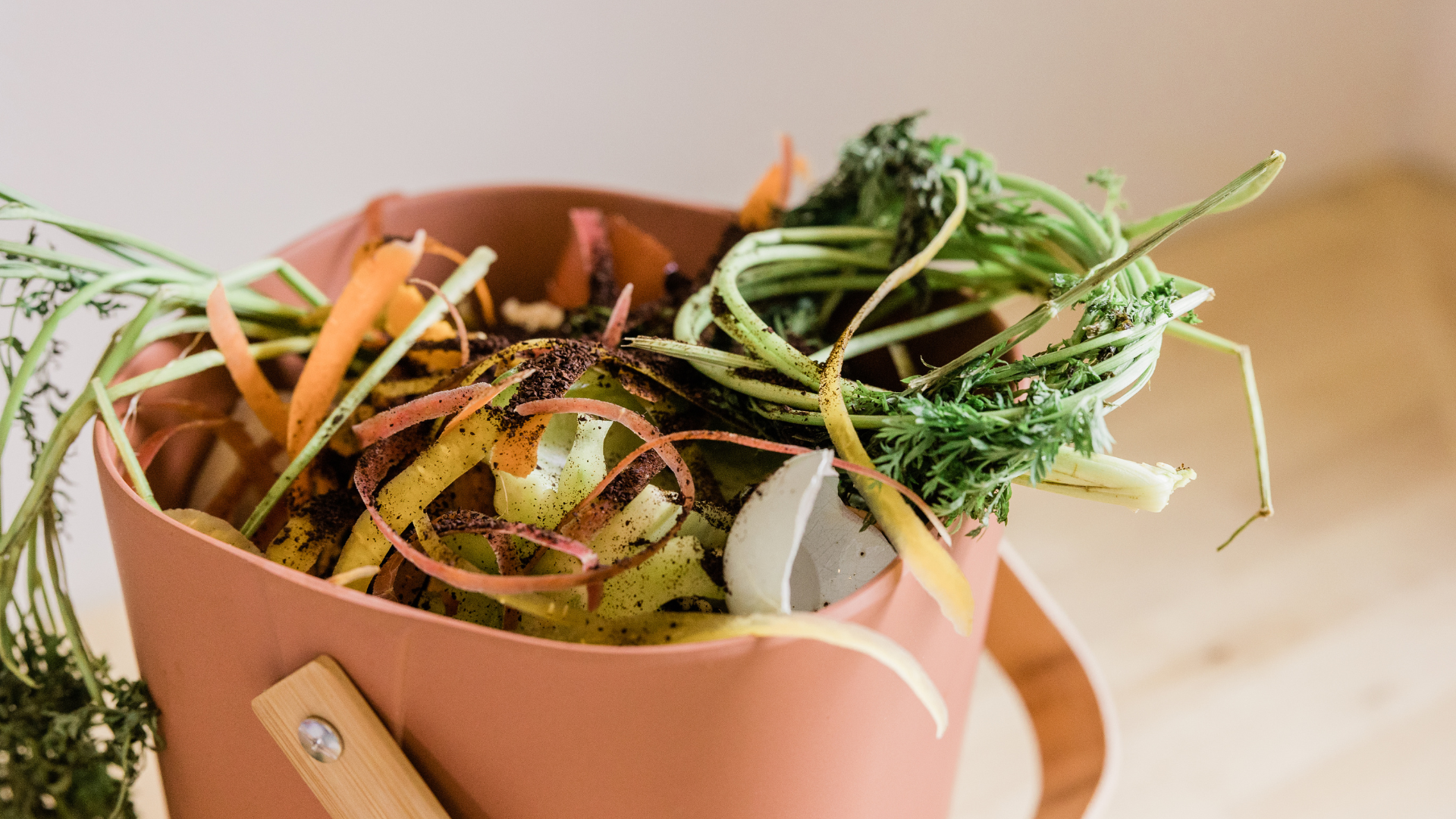
Stop Food Waste Day is a global day of action that aims to raise awareness of the problem of food waste. According to estimates from WRAP, food wasted in the UK across the food supply chain, post farm-gate, amounted to 9.5million tonnes in 2018, with a value of £19 billion. Food waste contributes to approximately 6-7% of greenhouse gas emissions in the UK every year.
The Right to Food initiative is looking at how the University of Kent can make a positive impact across the food system. So to mark this year’s Stop Food Waste Day on 26th April, Philip Pothen, Director of Engagement, takes a look at what steps Kent it taking to reduce food waste, from the university’s campus activities to its research, and civic engagement.
On Campus:
Kent’s Catering, Sustainability and Facilities teams are working together to reduce food waste on campus, which is a key component of the University Sustainable Food Action Plan.
Already, food waste from the university’s catering outlets is recycled for anaerobic digestion at a facility in Essex, where they produce bio fertilisers for farmers. This amounted to 13.5T diverted from landfill in the 2021-2 academic year.
Food that is nearing its end of life but still good to eat is sent to the Campus Pantry, where it is given to students facing food insecurity, or is being re-used: in March short-life breakfast cereals and bananas were used to bake banana bread, served as part of a coffee and cake promotion. The Gulbenkian outlet and the Kent Union Coop store has partnered with Too Good to Go, selling bags of food that would otherwise go to waste.
As well as redistributing surplus, the catering team are also looking at how they can ensure they are not over-purchasing or producing food in the first place. They regularly review the content and portion size of their dishes through a food management tool. Starting with sandwiches, they are moving more production centrally in-house, which not only means excess produce can be reused in other dishes, but also reduces food miles.
Civic Engagement
The University and the Student Union Union, in partnership with Produced in Kent, have just launched a gleaning project, which will see students collecting surplus fruit and vegetables from farms in Kent, and re-distributing it to businesses, charities and community groups.
According to a 2018 report from Feedback, food waste from farms is often out of the farmer’s control, and partly caused by supermarkets’ business practices. They also report that the scale of farm food waste has so far not been systemically measured. Through Produced in Kent’s new FoodLoop app, this gleaning project will record the volume of surplus food collected, helping us to understand the scale of the problem, and to find potential solutions to food waste on farms.
Find out more about the gleaning project here.
Research
With food waste being a problem along every step of the chain, we need a range of innovative solutions. To find these, researchers at Kent are working on a number of projects that challenge how we view “waste” and seek to find new uses for what we once threw away.
One project – ‘Upcycled Food: Getting the Goodness out of Kent Cherries’ – looks at how we can find high value products from the waste of cherries. The project will help capitalise on the fantastic health benefits of cherries and use parts of the fruit that are sometimes currently wasted.
While using food in new formats may be a “quick win” to the waste solution, academics at Kent are also working on more complex solutions that look at reprocessing waste. With Re-generation Earth, a team from Kent are working on a project to use biochar from farm waste to lock carbon into soils, instead of burning it. The biochar is a pure form of carbon that can be applied to the land and improve soil health. The project hopes to increase cropland productivity while reducing atmospheric greenhouse gases by offsetting current fertiliser usage.
Our researchers are also working on a project with Inspro using black soldier fly larvae. These larvae can eat almost all organic matter and consume twice their body mass every day. By feeding them excess and spoilt fruit and veg, the larvae get to work upcycling the waste into a more valuable source of protein that can be used as low carbon feed for animals, reducing reliance on imported soy feed, while the waste from this process itself can be used as bio-stimulant for crops.
Ultimately, this work, which takes a whole-system approach to what we think of as waste and finds new value streams for farmers, while simultaneously reducing their environmental impact, will increase the security and sustainability of our food systems for the future.
Going beyond re-distribution
Kent is helping to redistribute surplus food so that it is not wasted – from catering outlets, Co-op stores and local farms – at the same time alleviating some of the effects of food insecurity, by sending food to those who need it most.
But the Right to Food University initiative wants to go further, supporting research into how to stop food being wasted in the first place, and working with community partners to address the root causes of food insecurity, both for staff, students and the region. We’ll be sharing projects and actions as the initiative progresses.
You can find out more about campaigns seeking to address some of the systemic causes of food waste at the This is Rubbish site, which includes a toolkit and campaign films. To understand what businesses can do, read about WRAP’s Courtauld Agreement and see how well different sectors are doing on reporting their food waste on The Food Foundation site.