From the moment Alice Kinsella learned that she was pregnant, she intended to return to work post-partum. But as an elite-level artistic gymnast aspiring to compete in the LA Olympics, her goal is more than a challenge; it’s pioneering.
Two-time European champion and winner of the Olympic bronze in the team event at Tokyo 2020, Kinsella hopes to become the first British artistic gymnast to return to elite competition after giving birth.
To help her achieve her ambition, British Gymnastics have enlisted the help of Lecturer in Sports and Rehabilitation, Dr Julie Gooderick. She and her team are tracking Kinsella’s progress to ensure she receives the best possible support and will use the data to publish a case study that the profession can learn from.
The loss of pelvic floor and core strength – essential for gymnastics – during pregnancy is one of the reasons that there are not examples of gymnasts returning to elite competition after having a baby. Dr Gooderick’s research will provide a valuable blueprint for those hoping to do so in the future.
As she explained to host Anita Rani on Woman’s Hour: ‘Historically, female athletes very much saw getting pregnant and having a baby as the end of their career. There just weren’t enough role models and examples of people doing it successfully and because of that we didn’t have scientific evidence to help support athletes through that journey.
‘That’s now changing. There’s better infrastructure in place giving people financial support when they go on career maternity leave and the science around the return to sport post-partum is evolving. We’re growing that space in understanding exactly what we need to be doing as scientists to support athletes to return to sport.’
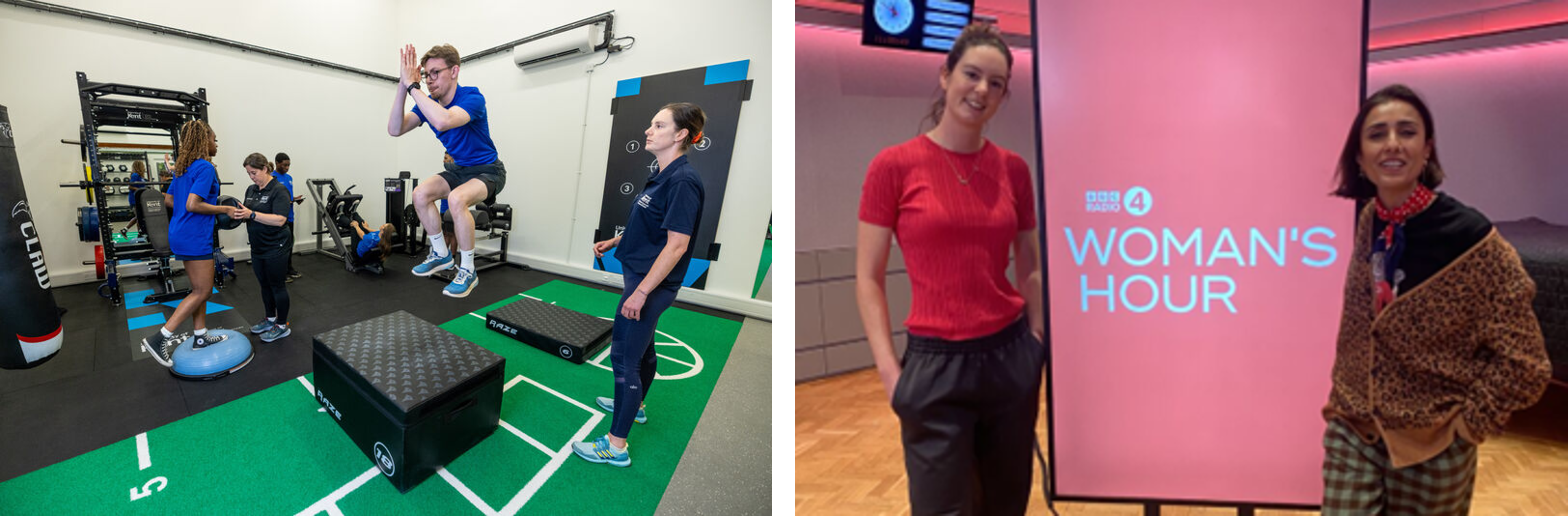
Left: Julie teaching Sports Science students in the gym. Right: Julie (left) talked about her research with Anita Rani on BBC Woman’s Hour.
The collaboration came about through Dr Gooderick’s connections with the team at British Gymnastics who wanted to understand best practice to support Kinsella and develop guidelines to help others returning to sport post-partum.
This, Dr Gooderick says, requires a holistic approach to the athlete process. ‘Nothing exists in isolation – strength doesn’t exist in its own world; it exists as part of psychology and hormonal profiles and everything else, so I wanted to track every aspect. The idea with this research is to present that holistic process of how we get an athlete from post-partum into a successful return to sport.’
To achieve this, Dr Gooderick and her team are tracking physical testing data, including jump tests, trunk capacities and force production, as well as tracking changes over time in other aspects such as sleep, hormonal profiles via blood tests, and psychological factors.
For Kinsella, the support is making a difference. Speaking to the BBC she said: ‘I am taking it day by day at the moment, but it is all going in the right direction. I am feeling very positive about it.’
‘It’s nice to know that I have all of this support around me and I’m excited to see the outcome.’
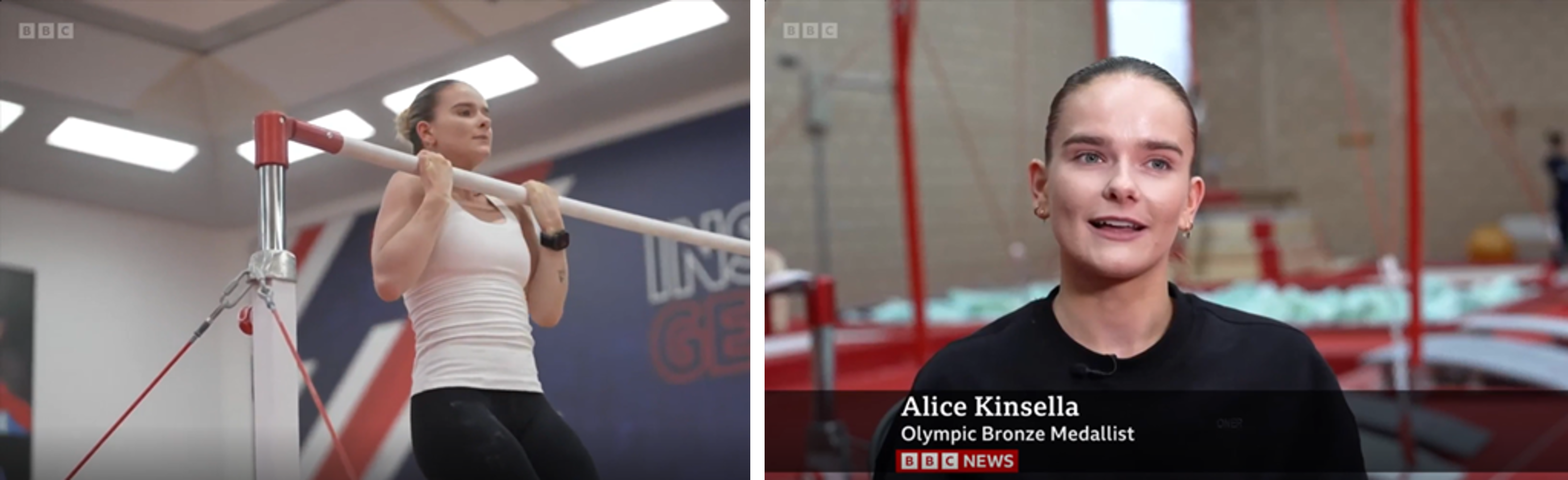
Alice Kinsella talks to the BBC about her experience.