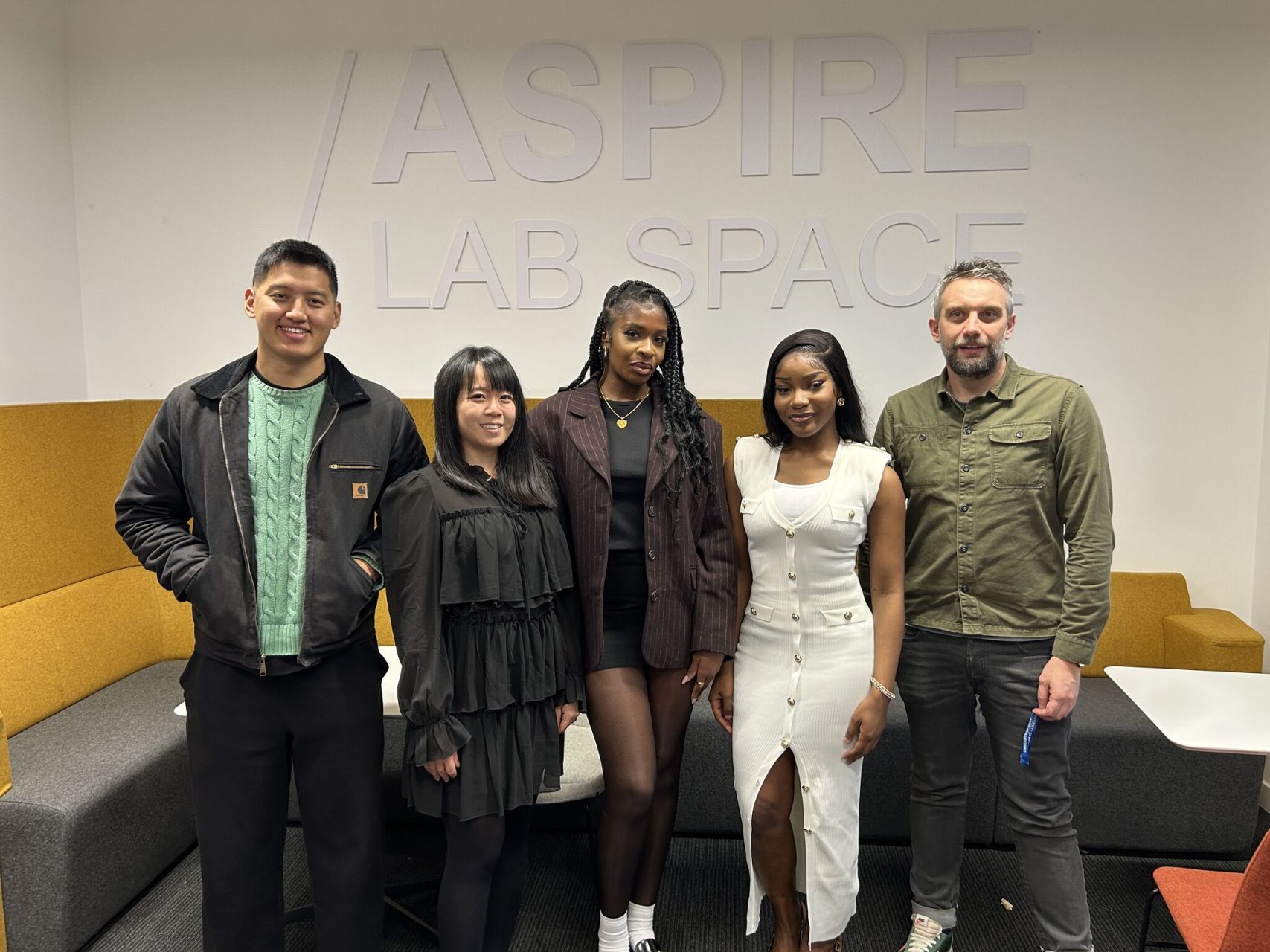
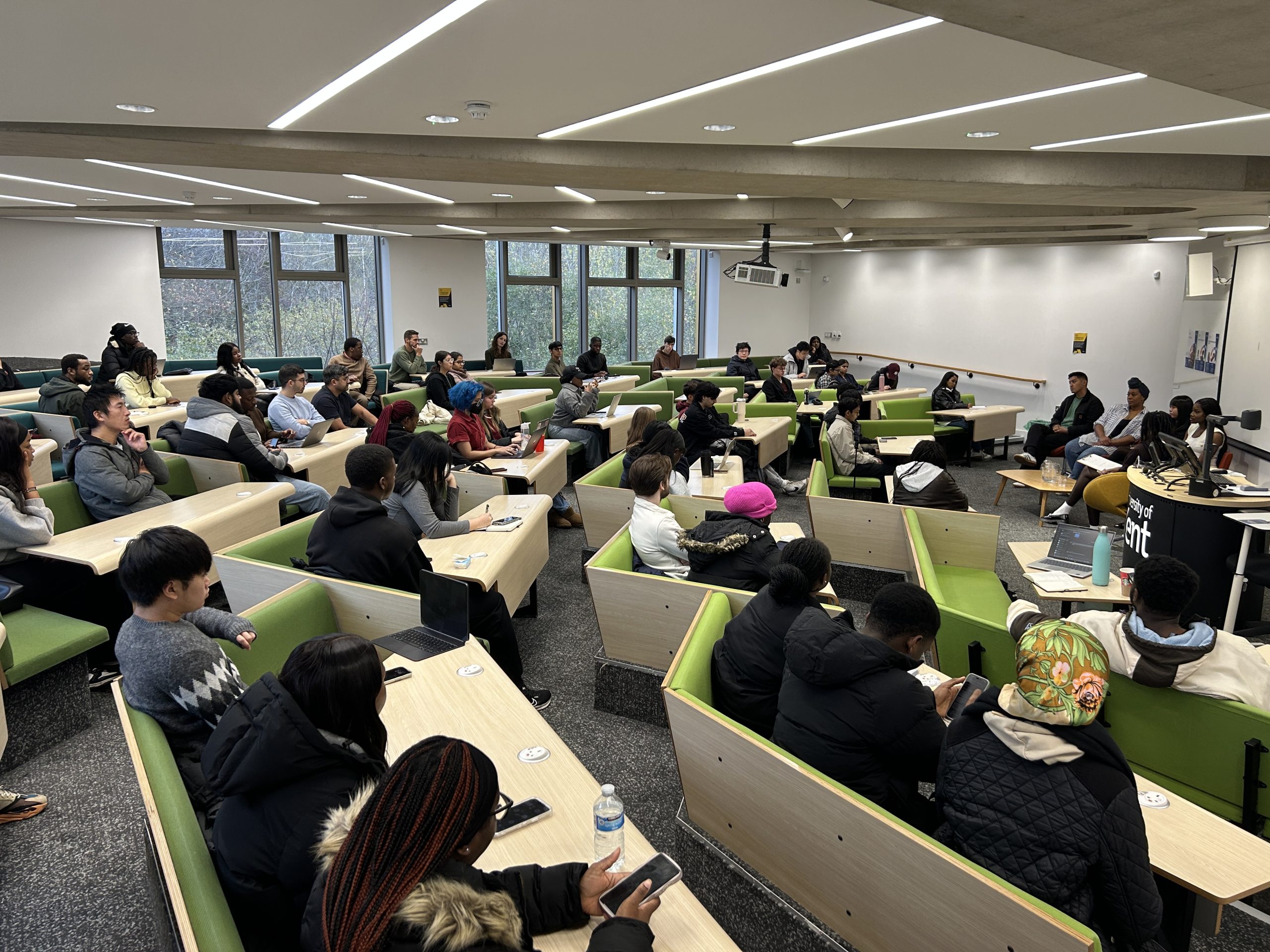
On Wednesday 19 November, Kent’s aspiring entrepreneurs gathered in Sibson, the home of ASPIRE, for a special panel event celebrating Global Entrepreneurship Week (GEW) 2025.
The conversation which ensued between Kent students and alumna on the panel, Chaired by Kent Business School alumna and founder of From Amora, Nadia Simpson, offered an honest and inspiring insight into highs, challenges, and breakthroughs of building a successful business from the ground up.
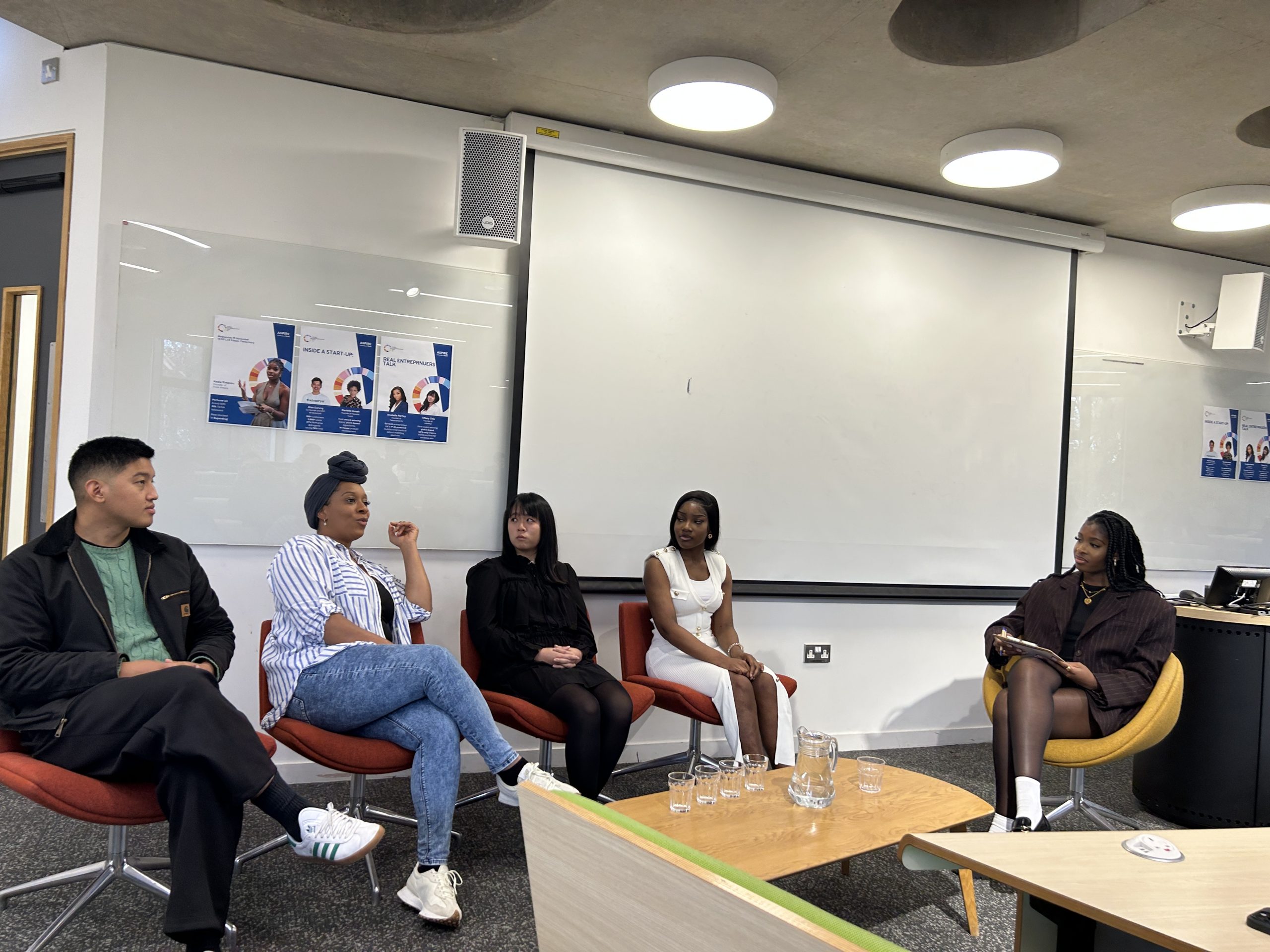
Left to right: Alan, Danielle, Tiffany, Annabelle, Nadia
‘ASPIRE have helped me out so much’
Nadia Simpson took part in the ASPIRE Business Start-Up Journey in 2018 alongside studying for her Accounting and Finance degree, and became a finalist. A year after graduating she launched From Amora, initially finding success distributing viral Arabian fragrances in the UK. She has since pivoted to creating her own perfume oils which are now sold online and in stores such as Superdrug.
Her advice for current students? Make the most of the support available to boost entrepreneurial skills whilst at University. ‘ASPIRE has helped me out so much in terms of coming up with my brand, learning how to pitch and finding funding to support my start-up.’
‘One of the best forms of marketing is the one on your phone ‘
For Anabelle Nartey, Medical student, ed-tech entrepreneur and Founder of TaLearntMed AI™, her own experience was what sparked her business idea. ‘What inspired me was going through the medical school application process myself. Every year we have 40,000 students applying to 8,000 medical spaces. I wanted to find a way in which to bridge the gap for people from low socio-economic backgrounds.’
‘If there’s something that’s an inconvenience to you that you feel passionate enough to solve, it’s likely that it’s an inconvenience for other people your age and a potential business idea’.
This logic led her to launch the UK’s first AI-powered multifactorial medical school matching platform, kickstarted by £2,000 Santander funding secured through ASPIRE and marketed on TikTok.
‘One of the best forms of marketing is the one on your phone. I made a one minute video pitch and it got thousands of views, then when I added photos I got 60,000 views. You can use lots of free tools such as ChatGPT to experiment with content and videos – give it a go!’
Anabelle doesn’t just recommend using ChatGPT to aid content creation. ‘AI is very powerful tool for market research and giving you an umbrella view of the industry. It can sometimes be a better problem solver than human beings and could give you a better solution than the one you may have come up with.’
‘When I first started I had no job and didn’t want to take risks. But then I realised the biggest risk in my life is to take no risk.’
For Tiffany Chiu, a Telegraph 100 Female Entrepreneur and Founder of JulieMay Lingerie, the UK’s only lingerie brand certified for sensitive skin, taking a leap of faith in her business was made easier by making connections. ‘Winning the UK Government’s Young Innovator Award helped my business grow but also connected me to people who could help me do that.’ For textile-based start-ups, she recommended organisations such as the UK Fashion and Textile Association that can help source suppliers.
Tiffany advocates a customer-centric approach. ‘When launching new lingerie collections, we make sure the whole product is customer-focussed by conducting customer surveys to make sure it’s something they actually want.’
For her, business growth isn’t just about expanding, but finding micro-efficiencies that can improve profit margins. That means overcoming any fear of numbers. ‘If you don’t know how much it’s costing your business there’s no way it can grow.’
‘You need to be 100% passionate about what you’re doing’
Danielle Asaah, Founder of Heavens Touch, a high-quality, natural products for textured hair and skin, doesn’t consider herself a traditional entrepreneur. Like Anabelle, her business is driven by necessity. ‘I just found an emulsifier, some oils that I liked and took it from there. My head was my prototype it just happened that everything I needed, everyone else needed it too.’
She built her loyal customer base selling her product at in-person events and pop-up markets, but has also experimented with influencer marketing. Her advice? ‘Consider that influencer you’re thinking about and whether it’s actually going to convert – followers aren’t everything!’ In her case, a celebrity follower of a lesser-known influencer bought her product and shared it on socials, causing her sales to skyrocket.
Danielle had lessons to share when it comes to product pricing. ‘Price accordingly. It took me a couple of years to be confident enough to say I need to look at balancing my numbers. I now sell more at a higher price point than what I did when it was lower!’
One thing Danielle was clear on was the need for enthusiasm, especially when expanding your team. ‘You need to be 100% passionate about what you’re doing before you offload it to someone else. Setting the foundations and culture is so important.’
‘Make sure you’re building a business that solves a ‘hair on fire’ problem’
Alan Gurung, Philosophy and Politics graduate and former winner of the ASPIRE Business Start-up Journey, took a rather unconventional approach to brainstorming his start-up idea. ‘When I finished university I listed everything I hated, which included managing my finances. The existing financial management software is s**t so I looked to solve that.’
Now Co-Founder of AdvisoryAI, a pioneering tool automating admin documents using AI, he believes the best start-ups are problem-focussed rather than solution-focussed. ‘You want to make sure you’re building a business that solves a ‘hair on fire’ problem. If AI happens to be the solution great, but it doesn’t have to be AI.’
Alan reassured the audience that a lot of resources aren’t essential at the beginning. ‘You definitely don’t need funding – it’s rather a way to accelerate the growth you already have. Begin by building an Minimum Viable Product and seek money from angel investors to begin with. We started out cold calling/LinkedIn/emailing until someone said ‘Hey, I’d pay £100 for this.”’
‘Leave new hiring until as late as possible. The quicker you end up hiring, the quicker you as a founder are not doing the most important things for your company. No one cares as much as the founder does.’
Global Entrepreneurship Week celebrations continued with a Detroit Soup-style pitching competition in K-Bar on the Canterbury campus on Friday 21 November. Inspired by the legendary Detroit Soup events,it was a pitch competition like no other. No pitch decks. No suits. No judging panels. Just students and the Kent entrepreneurial community coming together to share ideas and inspiration with a chance for students to win £500 to make their business ideas a reality.