Modern Pantomime
In this section we explore Modern Pantomime, theatrical tales of good versus evil, often based on a traditional fairy story or a story for children.

It is not just the characters that give pantomime its distinctive style. The lavish sets and showstopping costumes combine to make the pantomime a mesmerising theatre experience.
With origins in James Robinson Planche’s grand and theatrical productions in the 19th century, increasingly elaborate sets and costumes have become a strong feature of the modern pantomime. Pantomime performances feature multiple scene changes with new sets or objects appearing from the wings, flying in on wires, or sometimes magically appearing on stage.
Set and costume changes are used to elaborately transform the stage! These “transformation” scenes are used to move the show from one scene to another in an impressive or magical way, reveal a new set or part of the story, or support an extravagant costume change.
Costumes, especially the Dame’s costume, have become a focal point of productions, often combining a comedy element such as hidden messages and multiple layers. The show finale often involves the whole cast dressing in colour coordinated outfits as they enter the stage for a wedding or other celebration at the climax of the performance.
It would not be a modern pantomime without the slapstick comedy and the participation of the audience!
Slapstick Comedy
Pantomime performances are designed to be funny and make the audience laugh, and this is achieved with slapstick comedy. This is a type of over-exaggerated physical comedy that involves props, accidental violence and accidents, accompanied by sound effects. Slapstick has evolved from the earliest of pantomimes where clowning was hugely popular. The ‘slapstick’ itself is named after the prop used originally in the commedia dell’arte where two pieces of wood hinged together were used to create a loud bang to coincide with one character hitting another, being hit by an object or falling over.
Audience Interaction
Another vital element of the modern pantomime is the role of the audience. They participate in the performance by shouting out set words and phrases and by interacting with the performers on the stage. This is an element of pantomime that is loved by adults and children alike. Hero’s receive loud and joyful cheers and villains receive deafening boos and hisses. There is often a section where someone is hiding from another character by following them closely, and the audience help the character by shouting ‘He’s/She’s behind you!!’
The Pantomime Dame is a traditional role that is usually a portrayal of a female character played by a male identifying performer. An exaggerated and over-the-top character, the Dame often speaks to the audience, and delivers lines loaded with innuendo. The Dame wears the most elaborate costumes, and their storyline tends to reveal that while outwardly loud and brash they are more vulnerable and loving on the inside. The Dame traditionally is intended to be recognisably a man dressed as a woman, although at times has been played by a female identifying performer.
The Principal Boy, often the main character in the title of the pantomime and is sometimes the hero of the story. They are often the love interest of the Principal Girl. Traditionally this character was a male character being played by a female identifying performer. In early performances the principal boy would often wear thigh high boots and a short tunic costume, allowing a rare glimpse of the female body for audience members. In a modern pantomime the principal boy is now often played by a male identifying performer in a move away from the traditional pantomime structure.
The Principal Girl, also sometimes the main character in the title of the pantomime – such as Cinderella. She has a key role in the story as the heroine. In earlier pantomime performances the principal girl would have been characterised as the love interest of the principal boy and tended to be presented as a young and beautiful girl who needed saving. More recently, the principal girl tends to have a stronger, more feisty character who takes a leading role in the performance.
There is always a Villain or a baddie in a pantomime! This is a character that is
usually over-the-top villainous, plotting their evil schemes with cackling
laughter. The character often interacts with the audience, receiving loud boos
and hisses in return. The villain can be a male or female performer with parts
such as Captain Hook in Peter Pan, or the Wicked Queen in Snow White and the
Seven Dwarves.
Animals - often known as ‘skin’ characters - have a non-speaking role that is an important part of pantomime tradition, and generally loved by the audience. One of the most famous is the pantomime horse, which usually needed two actors inside the horse costume working together to make the animal move and sometimes dance!
A selection of items from the exhibition - find more in the Templeman Library Gallery space, installed until March 2025.
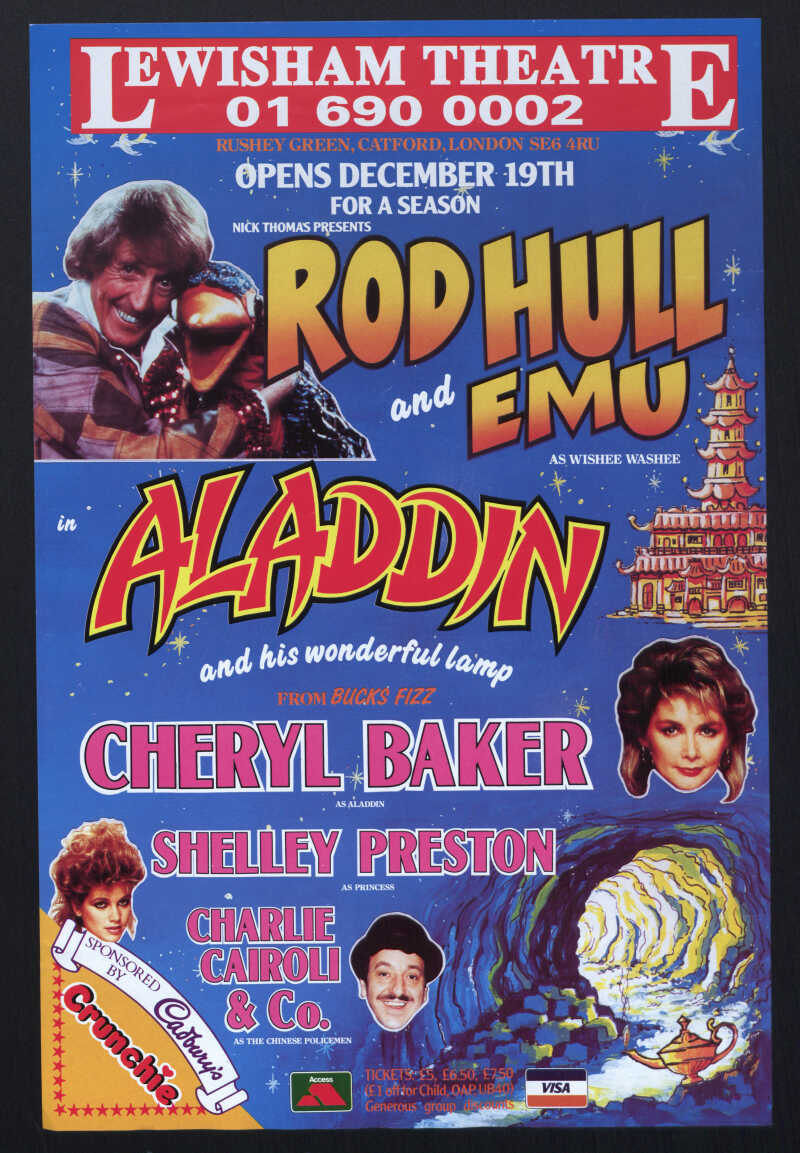
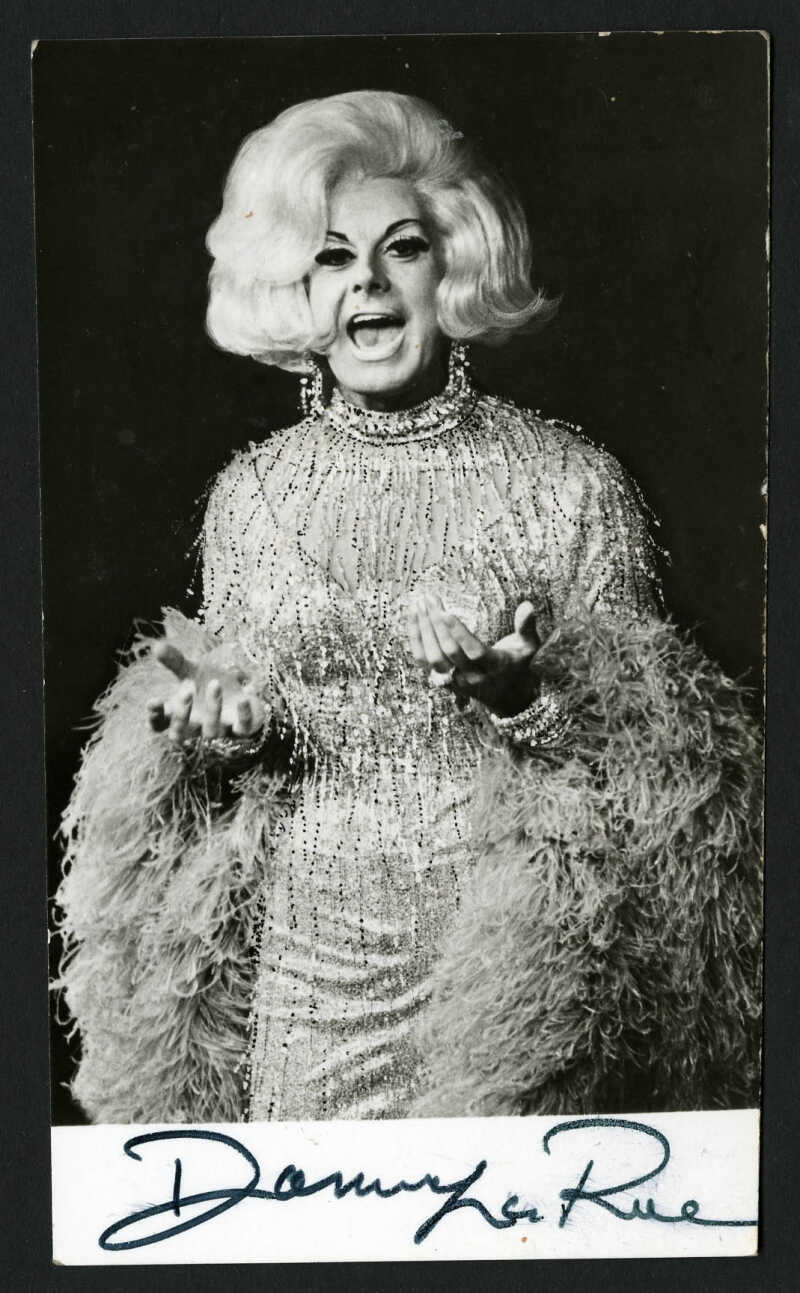
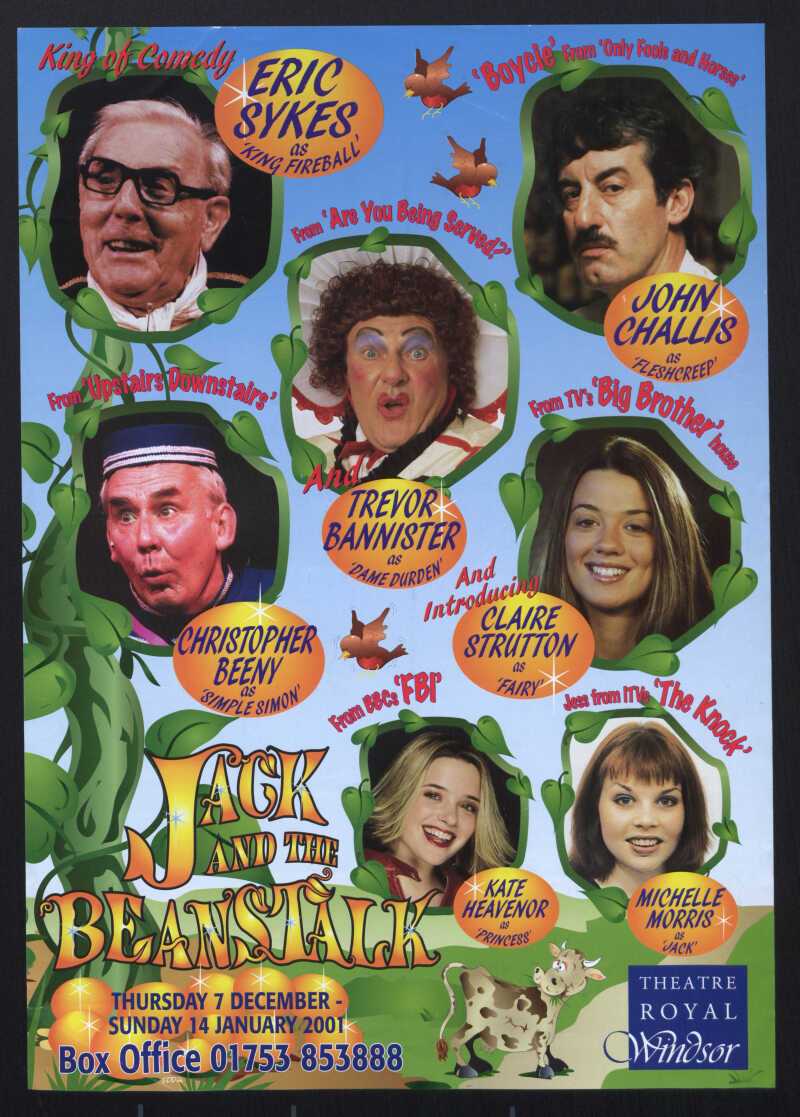
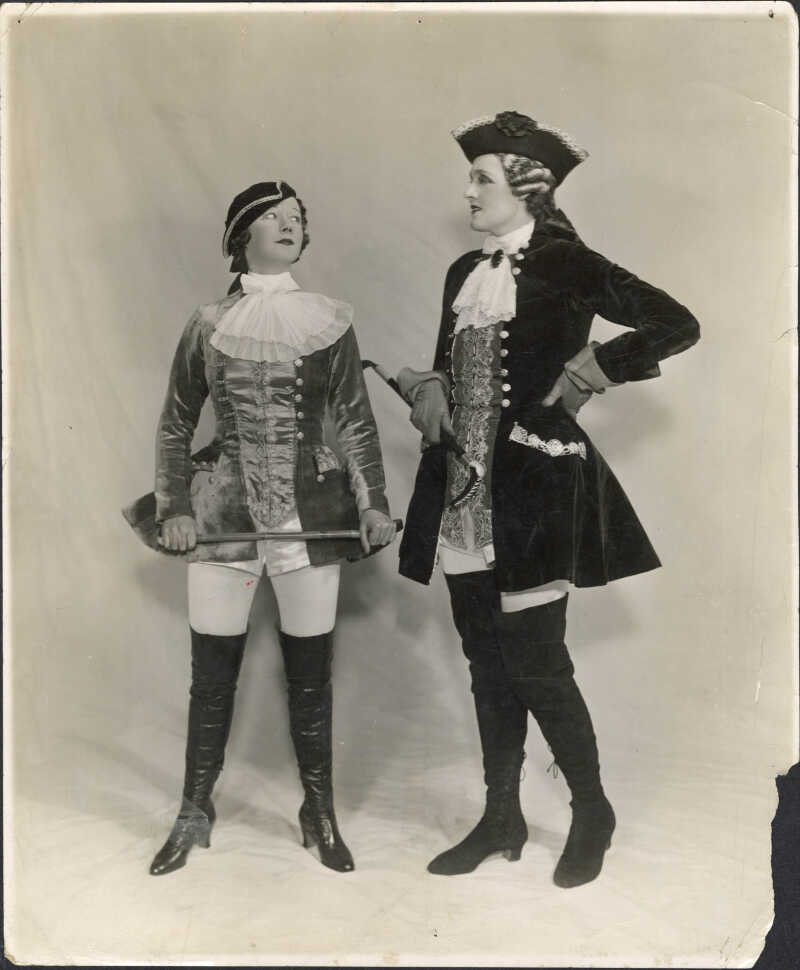
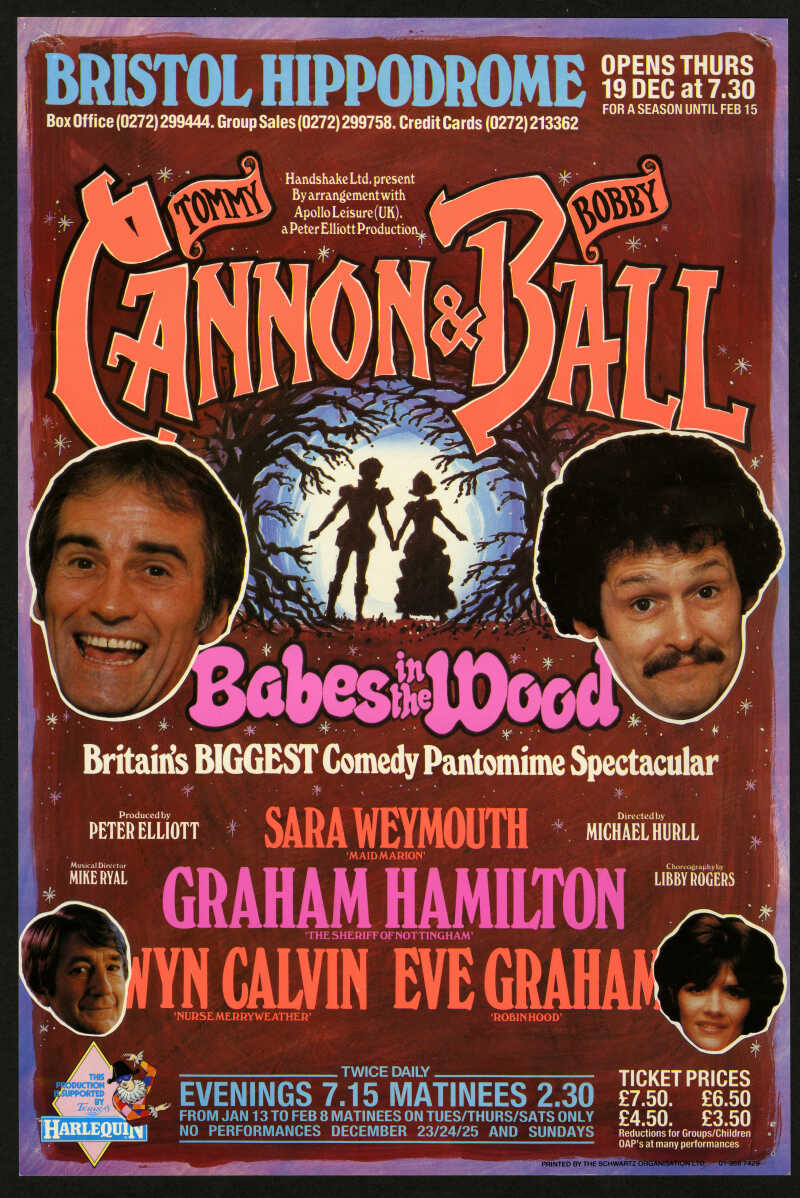
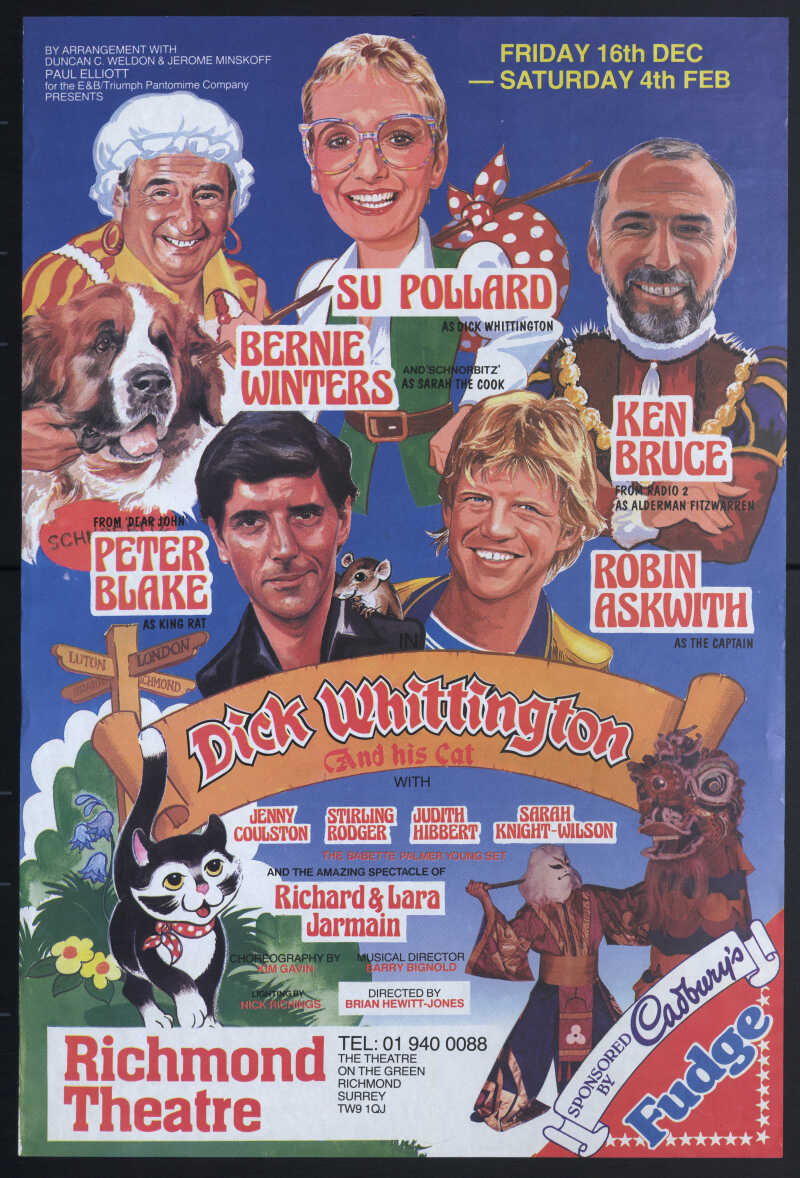
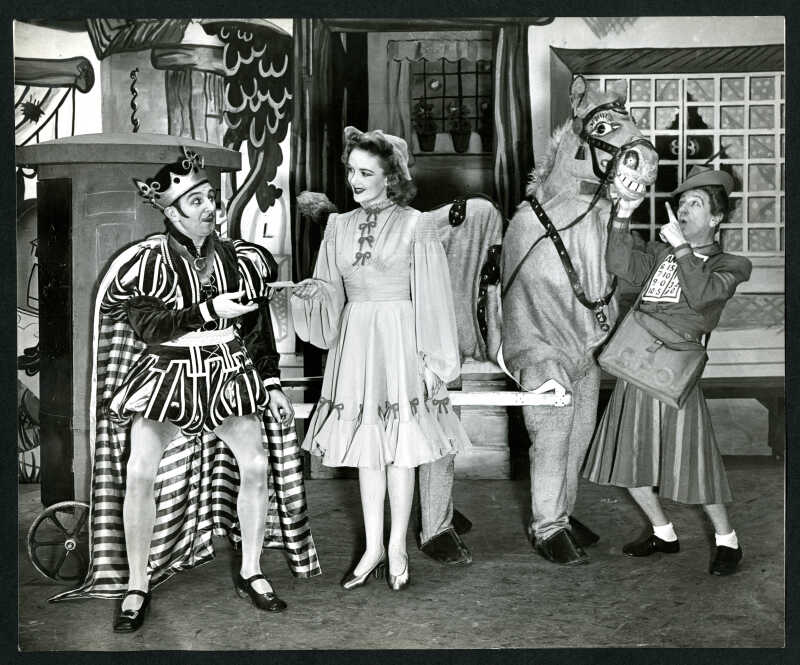
Away from the main London stages, local theatre pantomime productions are an important part of regional theatre provision. They are closely connected with their local communities, where audiences become familiar with the writers and performers. Sometimes local traditions develop, creating unique performances that resonate strongly with the audience. Scripts are written to feature jokes and satire about well-known local people such as politicians. Sometimes close geographic areas are mentioned in a spirit of light-hearted rivalry.
These community touches result in audiences returning to local performances year after year, often as a fun and family-friendly Christmas tradition.
In the same way that stars of music hall became popular in
pantomime productions in the 19th century, the modern pantomime continues this trend with
celebrity appearances. Celebrities attracted new audiences and helped to
increase the popularity of this extravagant style of theatre.
Among the many celebrity appearances over the years, in the 1960s and 1970s performers like Lulu, Frank Carson, and comedy duo Canon and Ball all featured in pantomime. In the 1980s and 1990s singer Toyah Wilcox, comedian Lenny Henry, boxer Frank Bruno and cricketer Ian Botham starred in panto, and in the 2000s and 2010s celebrities like Julian Clary, Paul O’Grady, and even Ant and Dec appeared in a panto.
