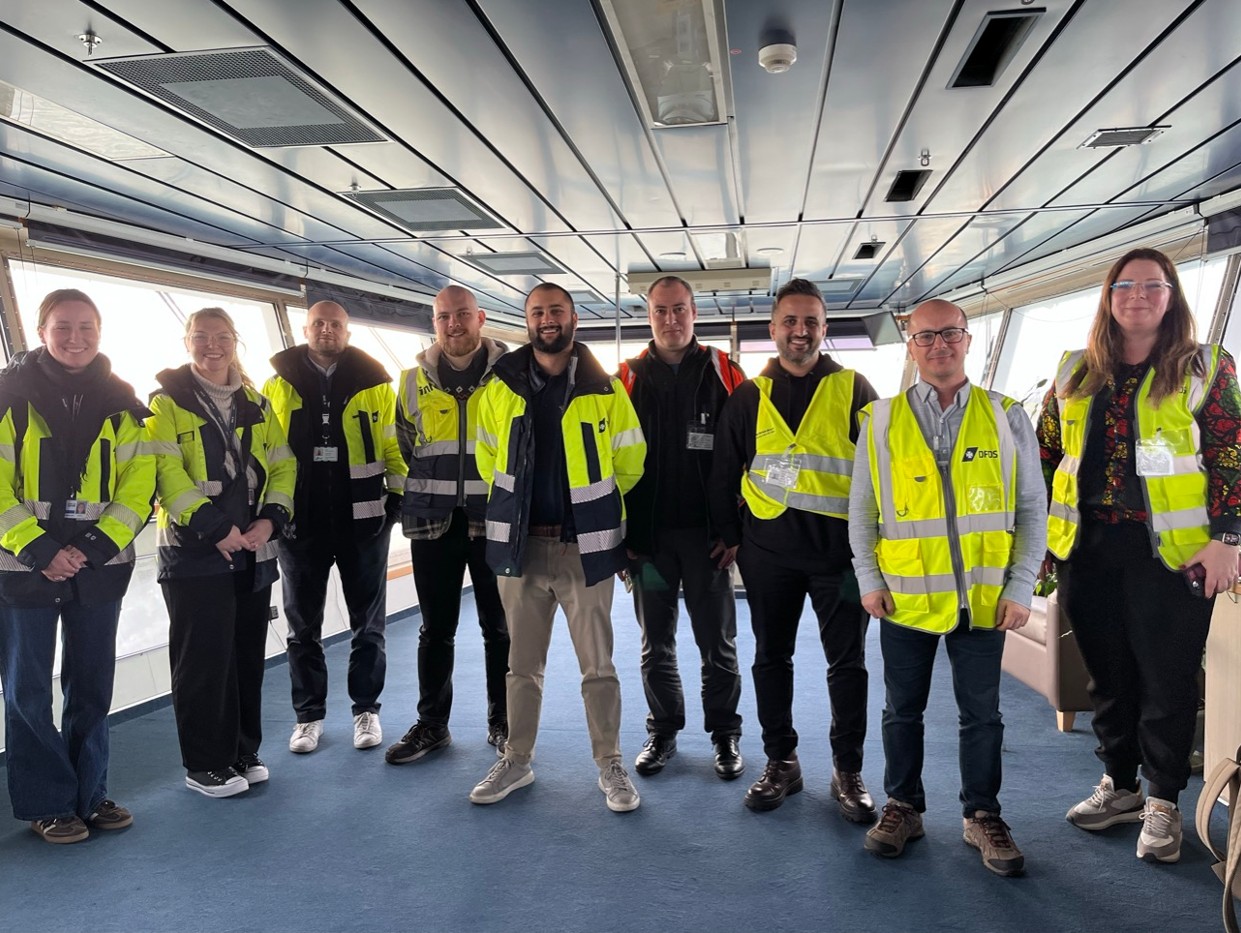
Two Government-funded projects supported by Kent researchers are bringing the electrification of ferry journeys between Dover and the French coast one step closer to reality.
Funded through Innovate UK’s latest Clean Maritime Demonstration Competition, the two projects will see Kent Business School and the School of Engineering and Digital Design work with local and international partners to overcome operational and skills barriers to introducing fully-electric ferries at the Port of Dover.
Modelling the unknowns
The Electrified International Ferries project will see Dr Ramin Raeesi, Dr Vedat Bayram and Zsofia Baruwa from Kent Business School work alongside researchers from WMG (University of Warwick) to build on former strategic and technical modelling work with DFDS. This will help the ferry operator understand the technical, economic, and logistical implications of introducing electric and hybrid vessels. Supported by AVL Powertrain Ltd and project managed by OpIntelS, they will build data-driven models to enable the Port to evaluate different scenarios. The model will factor in variables such as weather conditions, journey distance, battery space and the proportion of electric ferries in the fleet, to predict financial and operational issues.
Delivering green skills
With the introduction of new technology comes a need for new skills. Through the Integrated Skills and Talent for Short Straits Ferry Electrification (IAST ) project, Kent has partnered with Kent Invicta Chamber of Commerce and the Port of Dover to identify the training and skills development needs of those involved in planning, delivering and regulating the transition to electric power. The project will map out current demand for new skills and planned training infrastructure between now and 2035, with ambitions to support investment and offer the region new high skilled jobs based in the UK.
These projects are the result of years of collaboration between the University, the Port and ferry providers. In May this year, Kent became a founding member of the Short Straits Maritime Cluster; a collaborative, membership-based, not-for-profit organisation partially funded by the Department for Transport. Its ambition is to transform the Short Straits into a global model for maritime efficiency, safety, skills, and sustainability.
Dr Ramin Raeesi explains why collaboration is so important: ‘Electrifying the Short Straits ferry crossings is a significant and multi-faceted challenge across every aspect of the system: energy supply and shore connections, vessel electrification and battery sizing, workforce skills, operational knowledge, and more. Backed by government funding, we have fully embraced this challenge together with our industrial and academic partners, working with ports, operators, and end users over multiple phases to shape a solution that addresses all dimensions of the task. The two newly funded EIF and IAST projects take us another important step forward, bringing electric ferry crossings closer to reality on one of the busiest and most strategic routes in the world.’