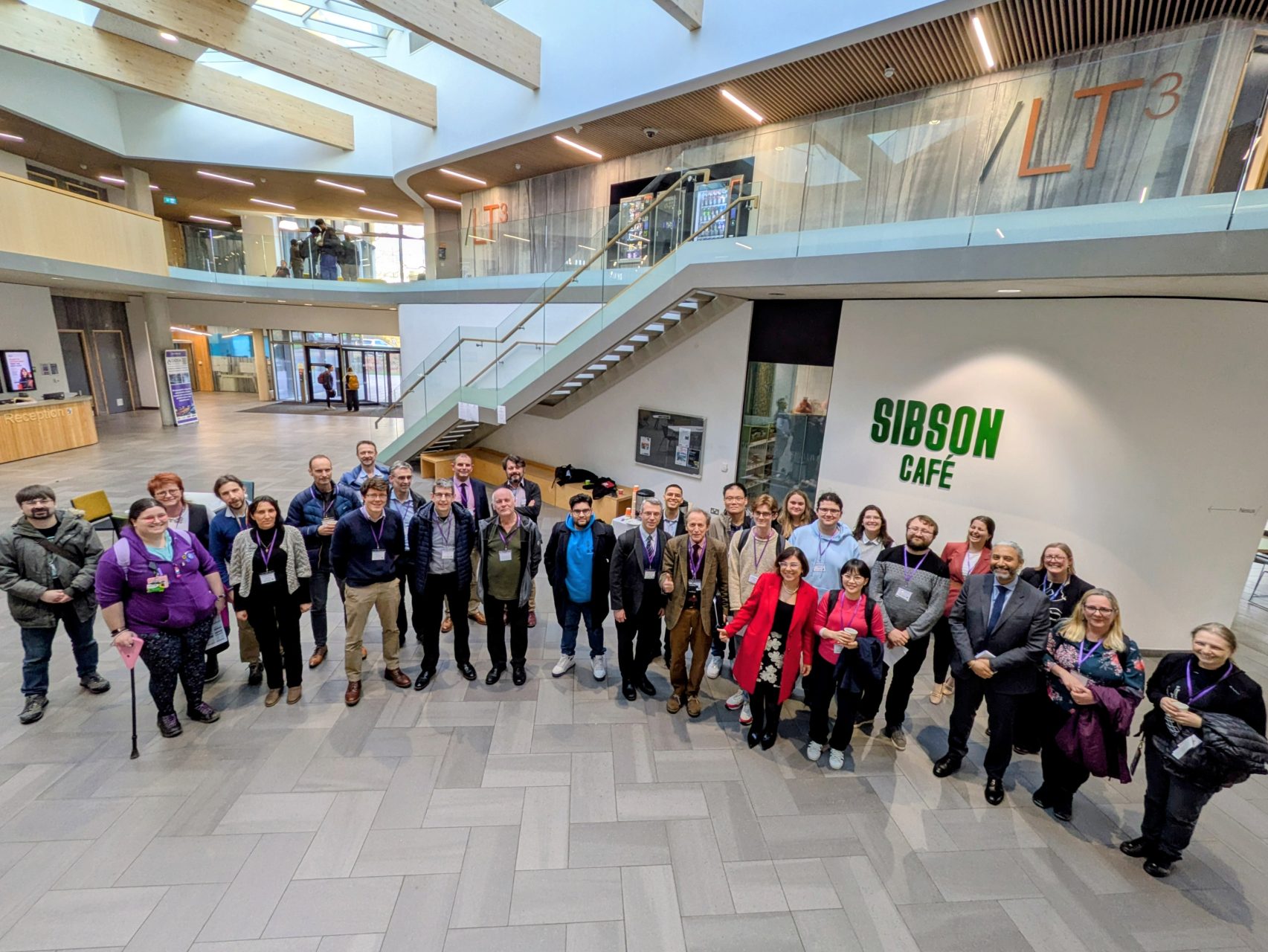
On Tuesday 10 March, the Centre for Advanced Diagnostics Development and Application (CADDA) hosted a workshop celebrating 30 years of optics research at Kent.
Over 80 clinicians, healthcare professionals, students and researchers gathered in Sibson to share the latest advances in optics technology and how these are being applied in healthcare to improve diagnostics capabilities, increase efficiencies in the NHS and ultimately, save more lives.
It comes at a time when optics technology, combined with machine learning and AI, is transforming the way doctors diagnose and treat disease, particularly in ophthalmology and cancer care. As Professor Taran Tala from North West Hospitals Trust explained in his talk, these advances are fundamental to the NHS achieving its 10 Year Health Plan ‘Fit for the Future’.
In the time since the Applied Optics Group was established at Kent in the early 1980s, the way optics is used in healthcare has evolved immensely. A major focus of the group is Optical Coherence Tomography (OCT), which can be used to build up high-resolution 3D images of the retina and other parts of the eye, allowing for detection and early diagnosis of disease. After its invention in 1993 it was initially limited to specialist clinics, but OCT is now found in high street opticians all over the UK.
Kent researchers have played a major role in the development of OCT technology. In 1996 Professor Adrian Podoleanu and Prof David Jackson developed a practical method to quickly produce ‘en-face’ or top-down OCT images of the retina, and in 1998 invented the combined OCT and scanning laser ophthalmoscope. Since the 90s, the group has published over 150 journal papers, patented more than 20 technologies, trained dozens of PhD students and led numerous successful partnerships with NHS, industry and university partners.
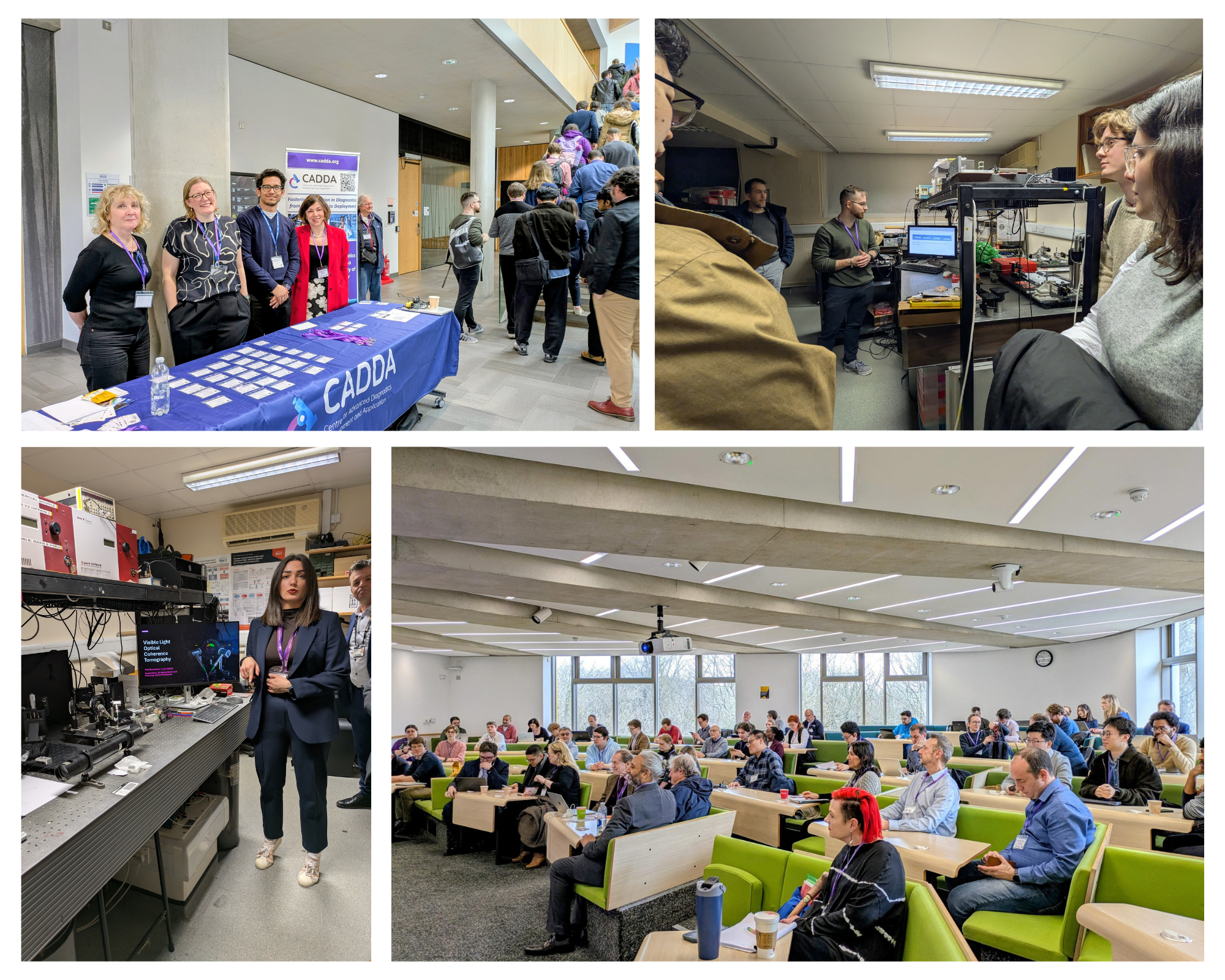
Speakers at the event from Kent, Imperial College, UCL and London North West Hospitals NHS Trust shared examples of how imaging technology is being used to guide surgery and help surgeons identify diseased tissue during operations. Projects which combine different optics techniques, as well as AI and machine learning capabilities, are resulting in faster, cheaper and earlier detection and treatment of cancer and eye conditions.
Examples include the application of portable, miniaturised OCT endoscopies to diagnose laryngeal cancer, an OCT-RAMAN system being tested in the breast cancer operating theatre at Nottingham City Hospitals, and biomedical optics for robotic surgery. The workshop was also a chance for Kent researchers to highlight technology that is yet to be applied in healthcare, such as the OCT pen developed by Dr Michael Hughes, a low-cost handheld imaging device.
In bringing together the inventors, investors and users of optics technology, CADDA created an opportunity for academic and industry professionals alike to explore further applications in healthcare and forge the relationships that can make these happen.
This is just one of a series of events organised by CADDA, a Centre funded by Research England and led by the University of Kent in partnership with The University of Manchester and University College London (UCL). CADDA was established in 2025 to fulfil an unmet need for coordinated diagnostics development in England/UK, driving the transition of diagnostics technology, business development and data analysis from academic partners into SMEs and on to application.