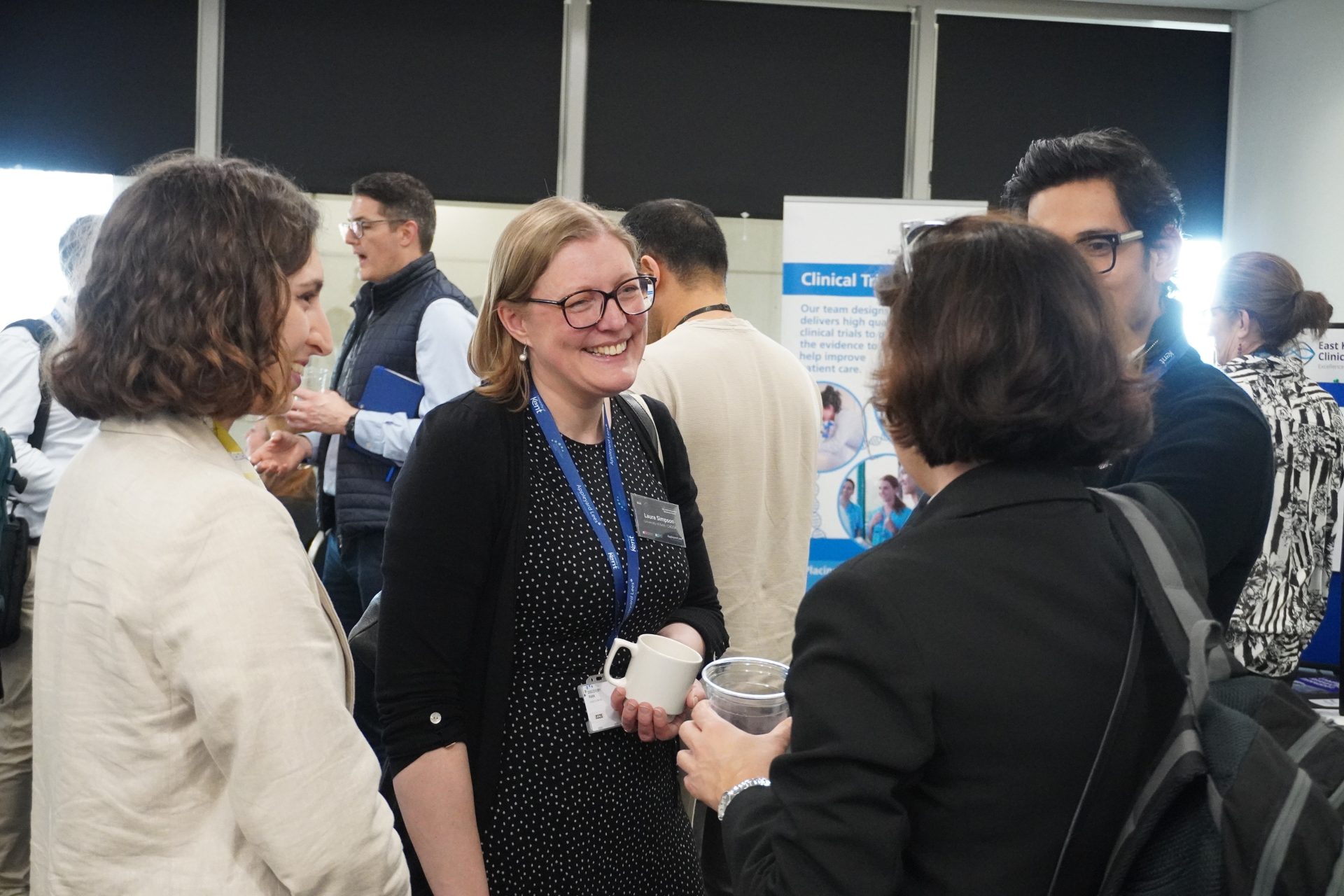
Researchers, clinicians, industry experts and funders came together on 5 March for the third joint Innovation Showcase hosted by Kent and Discovery Park.
The event highlighted how collaboration between academia and industry can help turn research ideas into practical solutions with real-world impact.
The showcase focused on projects supported through two of Kent’s Impact Acceleration Accounts (IAAs), which are funded by the Medical Research Council (MRC) and the Biotechnology and Biological Sciences Research Council (BBSRC). The programme provides flexible funding to help researchers develop early-stage ideas, build partnerships with industry and explore how their work could be applied beyond academia. Since 2022, Kent’s IAA funding has supported more than 30 projects across the University, helping researchers test ideas and move projects closer to commercial or clinical use.
The day opened with an introduction from Kent’s IAA leads, Professors Michelle Garrett and Tobias von der Haar from the School of Natural Sciences, who also announced a new funding round offering up to £20,000 per project.
Throughout the day, researchers shared examples of how IAA support has helped them develop innovative projects.
- Professor Jennifer Hiscock presented research exploring supramolecular self-associating amphiphiles (SSASs), molecules produced as a by-product of the sweetener industry that could improve the delivery of antimicrobial drugs within human cells. She also discussed the development of a new shock-absorbing material based on the protein Talin, with potential applications in advanced materials.
- Dr Marta Farré Belmonte shared research into the genetics of fertility in animals and humans. Through IAA funding, she has been developing a fertility test that works with frozen blood samples, which could make testing simpler and more accessible for the livestock farming industry.
- Dr Anastasios Tsaousis presented work exploring more sustainable alternatives to traditional animal feed. His research investigates whether black soldier fly larvae, which convert food waste into protein-rich feed, could help reduce reliance on soy while also improving chicken health.
- The event also featured research into assistive technology. Dr Matthew Pepper presented work on sensor-enabled wheelchairs that couldmonitorboth the performance of the chair and the wellbeing of its user, potentially helping identify mechanical issues or changes in a patient’s condition.
Alongside the research presentations, the showcase included talks from representatives of the Medical Research Council and Kent’s Centre for Advanced Diagnostics Development and Application (CADDA), who shared advice on funding opportunities and support available for researchers interested in developing translational projects.
A panel discussion sponsored by intellectual property law specialists Appleyard Lees explored the opportunities and challenges involved in managing intellectual property and bringing research discoveries to market.
Networking sessions throughout the day also gave attendees the opportunity to meet potential collaborators and discuss future partnerships.
Speaking ahead of the event, University of Kent co-organiser and Professor of Cancer Therapeutics, Michelle D. Garrett, said: ‘Our third Innovation Showcase is a celebration of collaboration and the exciting possibilities that emerge when academia, industry and clinical stakeholders work together. Attendees will see first-hand how Kent researchers are turning innovative ideas into impact, and have the chance to explore new partnerships that could shape the next wave of breakthroughs.’
Renos Savva, Head of Innovation and Venture Development at Discovery Park, said: ‘The third Innovation Showcase assembled researchers, clinicians, industry experts, professional specialists, and public and private funders in one space to create dynamic and powerful knowledge exchange. The quality and breadth of the projects on display – from antimicrobial drug delivery to assistive technology – is a testament to what becomes possible when academia and industry work in close partnership with ecosystem specialists. Discovery Park is effective in providing an environment where those connections can take root and grow.’
The next IAA finding round opens on 16 March.