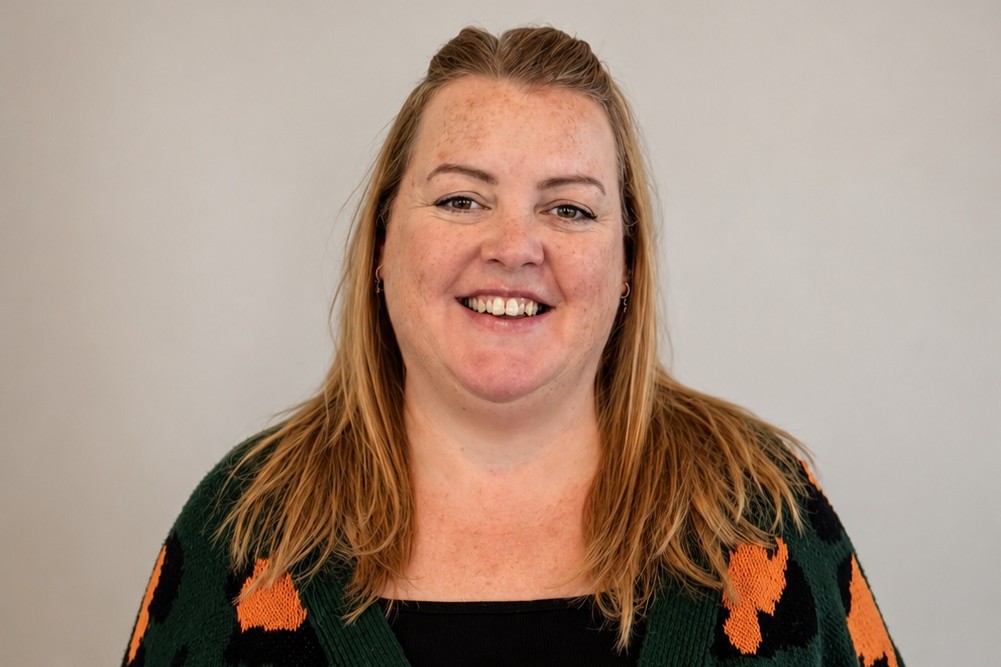
Sharon Manship, a Research Associate specialising in women’s health whose own experience of long delays in diagnosis and treatment inspired her research, has contributed to the first UK-tailored guideline on polyendocrine metabolic ovarian syndrome (PMOS, formerly Polycystic Ovary Syndrome (PCOS)).
The new National Institute for Health and Care Excellence (NICE) guidance, which is under consultation until 11 August, urges faster diagnosis and better monitoring of the recently-renamed condition.
As a lay-member of the NICE guideline committee, Sharon ensured that considerations were reflective of her own lived experiences of PMOS, and those of others she has encountered through her research in the Centre for Health Services Studies (CHSS).
‘As someone who has been living with PMOS for around 30 years, I am really pleased to see the new NICE guideline come to fruition.
‘I first sought support in my early 20s having realised that my irregular and painful menstrual cycle and issues with my weight and mental health were not the norm. It was so disheartening to be told, until I was finally diagnosed in my mid-30s, that my symptoms were just part of being a woman.’
PMOS is a lifelong condition characterised by irregular periods, high testosterone levels, and ovaries with multiple small follicles. Despite affecting around 1 in 8 women, PMOS is frequently under-diagnosed and inconsistently managed.
With lived experience of the condition, Sharon had been interested in researching this area of women’s health long before she came to CHSS in 2023, but had been deterred.
‘When I expressed an interest in researching PMOS, a colleague suggested that I steer clear of something that had adversely impacted me since it could be too emotional and I may be too close to it. CHSS took a very different approach. When I started my role as a Research Associate, my line manager, Dr Sarah Hotham, actively encouraged me to explore what mattered to me.’
CHSS is the largest research centre at Kent, committed to delivering impactful research into a wide range of health and social care systems and health and care services issues at local, national and international levels. As well as providing health and social policy insights for national decision-makers, researchers in the Centre work with local government and health services across Kent, Surrey and Sussex to build research capacity and culture and address the key health and social care research needs across the local region.
It’s here that Sharon and her fellow researcher, Kate Day, were given the freedom to conduct research examining the diagnosis experiences and support needs of individuals living with PMOS in Kent, Surrey and Sussex. This informed a report outlining recommendations for ongoing care published earlier this year.
Sharon and Kate also lead the Inclusive Women’s Health Research Group at Kent and, in 2025, Sharon launched the PMOS Research Network UK to create a space for researchers and professionals nationally to connect and exchange ideas.
Reflecting on what she’s achieved, Sharon said: ‘I am so grateful that I was encouraged to pursue my interests in PMOS research. Being able to focus on something that I am both personally and professionally passionate about has made me feel very motivated to continue and given me a great sense of achievement in being part of something that will help others like me in the future’.
The NICE guideline recommends that people with PMOS have their condition diagnosed sooner and be offered an annual review to monitor symptoms, treatment and long-term health risks.
‘As a lay member, I was able to contribute insights from both my own lived experience, and that of others I’ve engaged with through my research and professional networks.
‘My hope is that with this new guideline, people with PMOS will be taken seriously, diagnosed earlier and provided with evidence-based support and care from healthcare professionals from the outset, rather than having to go through what I went through.
‘I am positive that the whole community of individuals living with this all-encompassing and debilitating condition will similarly welcome this new guidance.’
NICE’s draft guideline is open for consultation from 1 July to 11 August 2026, and NICE are inviting feedback from healthcare professionals, patients and the public. They expect to publish their final guideline on PMOS in December 2026.