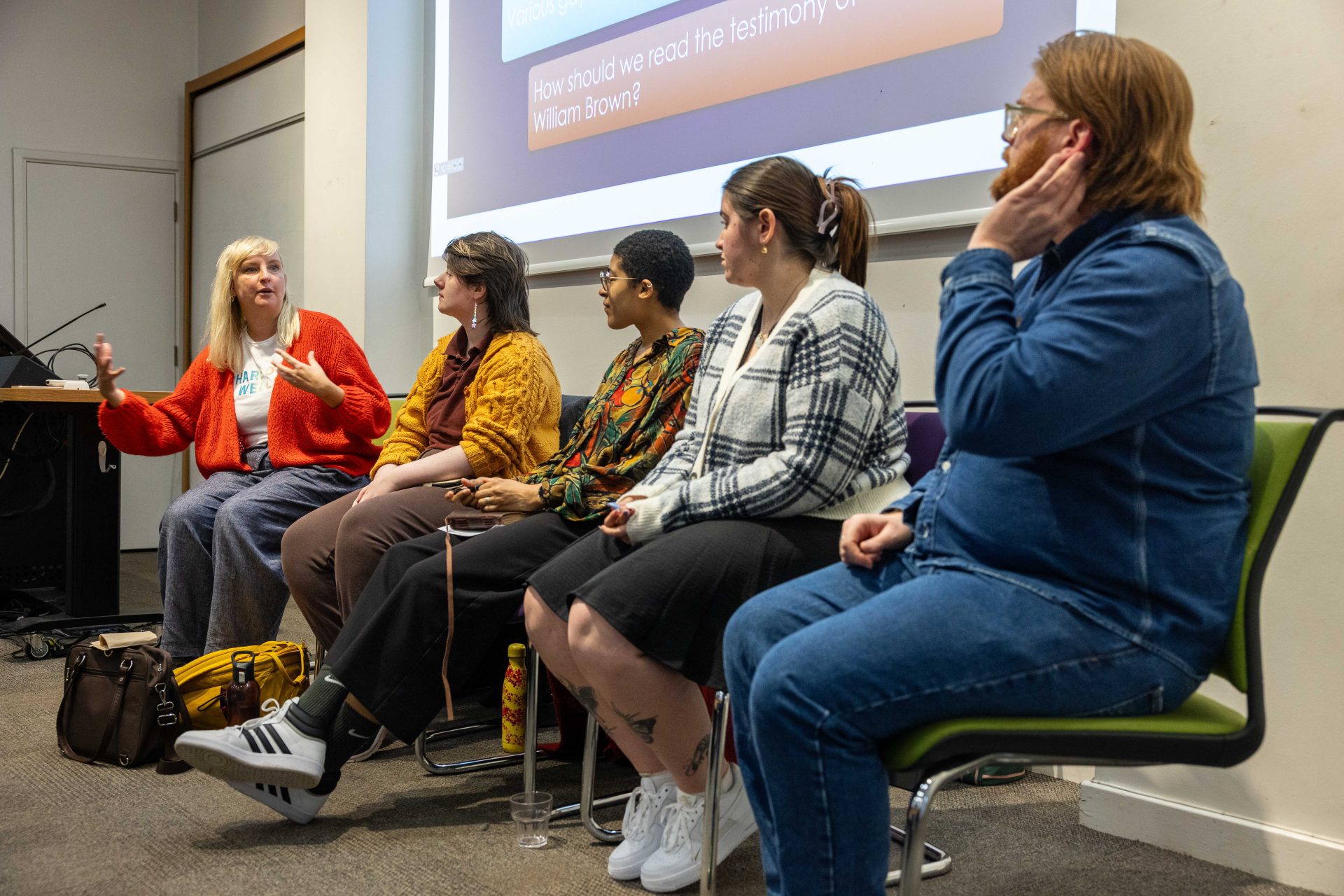
On Wednesday 25 February, the School of Humanities marked LGBTQ+ History Month (February 1 – 28) with a powerful and thought-provoking roundtable, ‘Queer Pasts, Queer Futures’. Bringing together undergraduate and postgraduate researchers alongside academic staff, the event showcased the depth, diversity, and urgency of queer scholarship across disciplines.
The programme featured a dynamic series of short presentations followed by rich, engaged discussion. English PhD researcher TC de Roche-Puckerin explored Black queer resistance in Q.U.E.E.N. by American recording artist, Janelle Monáe. Classics undergraduate Madi Blackwell re-examined the legacy of Roman Antinous, interrogating his modern status as a so-called “gay icon” and reading new interpretations into his gender fluid identity.
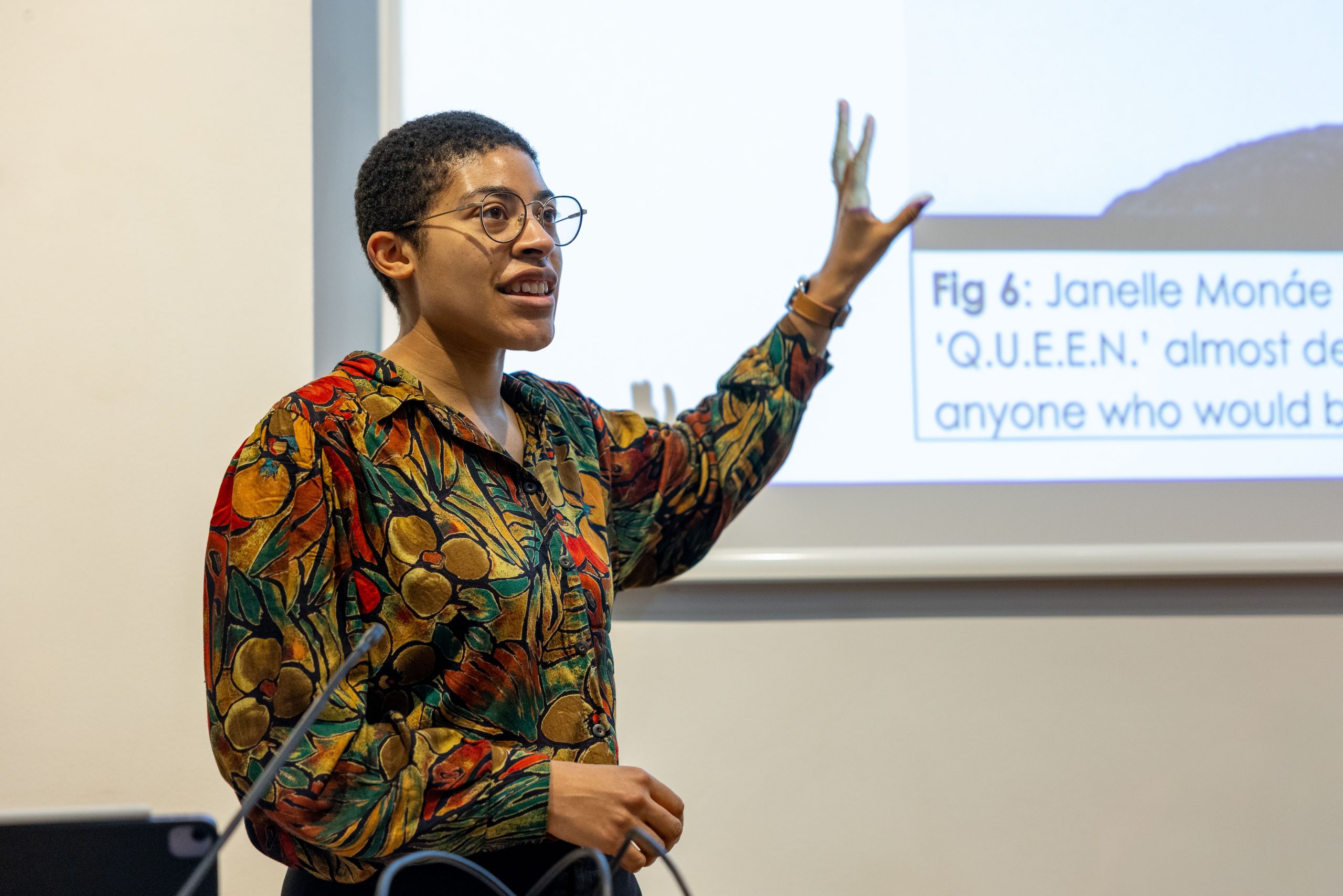
Dr Declan Kavanagh offered compelling reflections on 18th-century representations of queerness within the ‘molly house’ pub -historically a place where queer men, or ‘mollies’, could meet others like themselves, without fear of prosecution and public hanging-, tracing hidden histories. In moving contrast, undergraduate Tea Scott shared original poetry on trans identity, bringing lived experience into conversation with historical inquiry and reminding the audience that queer futures are being written now.
The discussion that followed was generous and inquisitive. Audience members debated the evolution of queer terminology, questioned the ethics of archival recovery, and reflected on how we responsibly narrate histories of gender and sexuality across time. Above all, ‘Queer Pasts, Queer Futures’ was an affirming, inclusive space of intellectual exchange across differences. It highlighted the vibrancy of queer research within the School of Humanities and modelled the transformative possibilities of collaboration and co-creation between students and staff.