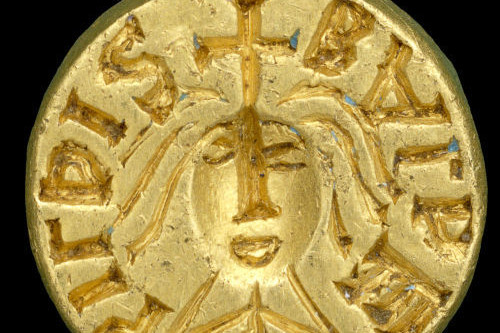
The seventh century was a transformative period for Merovingian Gaul and the Anglo-Saxon kingdoms, areas which developed in parallel and in relation to one another. In recent decades, a substantial amount of new archaeological and numismatic evidence has been discovered which has transformed our understanding of the extent and nature of the interactions between England and the Continent in the Early Middle Ages. Though scholars have long shown that connections were important, there remains a tendency to focus on individual regions rather than the transnational networks into which they fitted. Additionally, studies examining the links between England and the Continent have largely followed Levison (1946) with a focus on earlier or later centuries and research has disproportionately centred on one form of evidence.
As this paper will demonstrate, undertaking a transnational and interdisciplinary approach to interrogate the cultural, political and economic relationships between these regions in the seventh century provides a far richer and nuanced understanding of these relationships and the wider developments that occurred in the seventh century. A reassessment of the surviving evidence also reveals that several assumptions that continue to persist within the scholarship are problematic and/or flawed. Online Teams Link: Join the meeting now