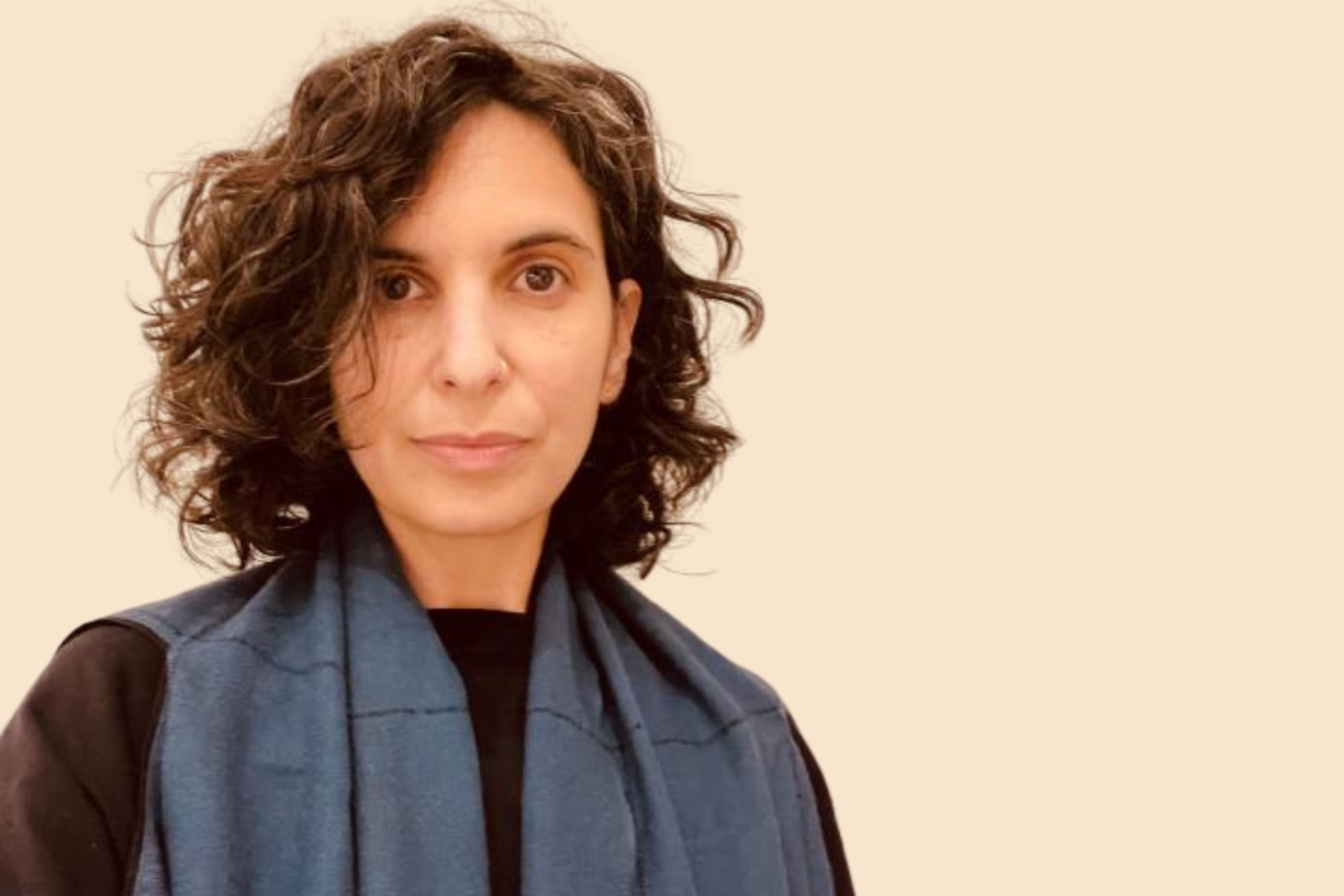
Dr Jennifer Leigh, Reader in Creative Practices for Social Justice, has been named in this year’s Shaw Trust Disability Power 100 list in recognition of for her impact, innovation and influence in changing the perceptions and stereotypes of disability.
Recognised for her work as a disability changemaker, Dr Leigh is being celebrated as one of the 100 most influential disabled individuals in the UK and a leader in her field. The awards are publicly nominated and judged by a panel of 25 disabled champions including international business leader Dr Shani Dhanda, Chief Executive of Paralympics GB, David Clark and Coronation Street actor Cherylee Houston.
Having late-abandoned a PhD in science to train as a yoga teacher, somatic movement educator and therapist, before retraining as a science teacher and completing a PhD in education, Dr Leigh doesn’t consider herself a typical academic.
Speaking about what drives her work, she says: ‘I believe systemic discrimination has to be considered inclusively and intersectionally. My therapeutic training underpins my research. I am passionate about using creative and embodied methods to connect authentically. I developed Embodied Inquiry which has been applied across many disciplines and been extended into PanEthnography. It is a powerful tool facilitating emotional connection, rapport, and meaningful participation, co-creation, and co-production.’
Alongside her pioneering application of Embodied Inquiry in scientific research, she has led research for the International Women in Supramolecular Chemistry Network which led to the publication of a book sharing research-based fictional accounts of intersectional marginalisation. These ‘true’ but not ‘real’ stories allowed audiences to connect emotionally without the blame or pity often evoked by real-life case studies or ‘success stories’.
Speaking about the response to the book, Dr Leigh says: ‘People told me they felt less isolated as it was like hearing their own story, or that they had never realised the emotional impact of marginalisation before. Comment pieces on topics that came up time and again in our research; ‘Pregnancy in the lab’, ‘Planning a family’, and ‘Listening to fathers in STEM’ reached over 3 million people.’
She continues: ‘Gender is not the only barrier in science or academia. I aim to amplify the visibility and achievements of Black women and scientists in the Global South, working with Empowering Female Minds in STEM and colleagues across sub-Saharan Africa.
‘My work on ableism in academia was featured in Nature. My research with NADSN and recommendations around accessible labs based on lived experiences of disabled, chronically ill, and neurodivergent scientists has contributed to new laboratory building design, an All-Party Parliamentary Committee, and policy from the Royal Society of Chemistry.’
National charity, Shaw Trust, runs the Disability Power 100 to raise the profile of disabled talent and challenge the disability employment gap head-on. Head of Disability Power 100, Alona De Havilland, said: ‘The Disability Power 100 is all about creating change, it celebrates ambition and achievement, and plays a role in challenging society’s perceptions of disability by recognising the strengths, contributions and successes of 100 disabled individuals each year.’
‘We all need role models. People who are pioneers and changemakers. This year we witnessed our Team GB Paralympians rightly celebrated for their elite athleticism, sporting prowess and determination to succeed. The Disability Power 100 celebrates disabled roles models with the same determination, expertise and ambition in all sectors from architecture to construction; finance to healthcare; transport to music. It is a rallying cry to future generations of leaders and a call for employers and society to recognise the talents and skills of disabled people.’
Dr Leigh’s full profile and Q&As can be found on the Shaw Trust Disability Power 100 website.