PGCHE

Learning Outcomes

Participants who successfully complete the programme will be able to demonstrate achievement of the following:

Knowledge and understanding of
  • appropriate methods for teaching and learning in their own subject area and at the appropriate level;
  • models of how students learn;
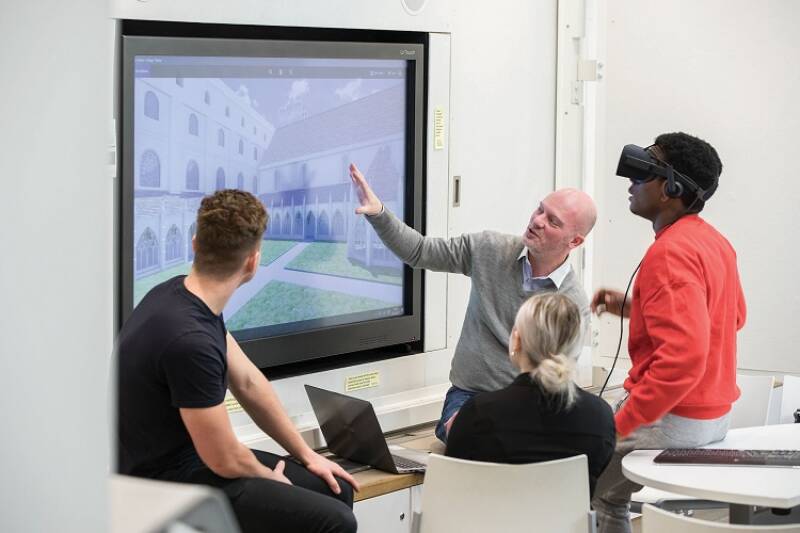
  • the use of learning technologies appropriate to the context in which they teach;
  • methods for monitoring and evaluating their own teaching;
  • the implications of quality assurance for their own practice;
  • methods for the development of their research careers;
  • methods for obtaining and managing research grants.
Intellectual skills:
  • ability to synthesise information from a number of sources in order to gain a coherent understanding of educational theory and practice, and to apply it within the academic environment;
  • ability to evaluate current research and scholarship in teaching and learning;
  • ability to identify sources of research funding and make effective applications for such funding.
Subject-specific skills:
  • ability to design higher education programmes, modules or schemes of work, in the light of a broad understanding of curriculum development, and to meet the requirements of teaching quality assurance;
  • ability to evaluate a wide range of teaching and learning methods and identify appropriate methods to use with large groups, small groups, and one-to-one;
  • ability to recognise the diverse needs of students, to respond to the requirements of widening participation, equal opportunities, disability legislation and key skills, and to provide support to students in both academic and pastoral situations;
  • ability to evaluate a wide and appropriate range of assessment methods and identify appropriate methods to support student work and record achievement;
  • ability to make use of local, regional, national and international resources and networks for the production and publication of research;
  • ability to understand the essentials of the management of research staff and the supervision and examination of postgraduate students;
  • ability to operate and develop effective administrative processes within quality assurance codes of practice;
Transferable skills:
  • Improving own learning: the skills of a reflective practitioner who is able to evaluate their own teaching and research practice using appropriate feedback mechanisms and to plan for continuing professional development;
  • Communication: ability to communicate effectively and appropriately in a diverse range of teaching and research contexts, using IT where appropriate, and showing assured, accurate and fluent use of language in presenting information, sustaining the interest of others and responding perceptively to their contributions;
  • Problem Solving: expertise in operating successfully within the constraints and opportunities of the institutional setting, managing change, and developing strategies for balancing and integrating teaching and research;
  • Working with others: ability to work effectively as part of a team, sustaining motivation and effective working relationships in order to meet responsibilities and to enable others to do so.