Featured News
Annual Kent-Kew Distinguished Ethnobotanist Lecture 2023
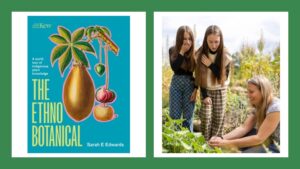 Dr. Sarah Edwards (University of Oxford Botanic Garden and Arboretum and Institute of Human Sciences), gave the 24th Lecture on Ethnobotany: The Sacred and the Science. As an ethnobotanical practitioner, she discussed her journey integrating cross-cultural teachings from traditional knowledge holders and colleagues from across the globe with scientific understandings. As a bridge between different knowledge systems, Ethnobotany can offer insights to help address current ecological crises. Her new book The Ethnobotanical is available from Kew’s website.
A recording of her talk will be available on the CBCD YouTube Channel soon.
Queries: Raj Puri r.k.puri@kent.ac.uk
Ethnobotanical research flowers at Kent in 2023
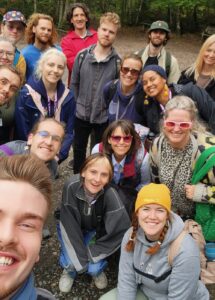 This year’s cohort of talented Ethnobotany masters students is our 25th! As the teaching terms end and students head off in all directions to begin research projects, some right here in Canterbury, others in 10 countries in the Americas, Africa and Asia, we are pleased to report their successes in attracting funding for their research. More here!
(A review of the programme after 25 years will follow soon!)
CBCD welcomes Dr Yanfei Geng, Visiting Fellow 2023
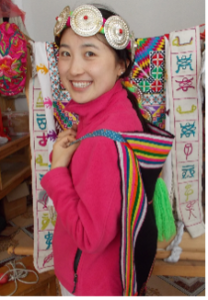 Dr Yanfei Geng is an ethnobotanist from the College of Tea Sciences at Guizhou University in China. She has a PhD in Botany from Yunnan University, where she studied the wild fodder plants of the mithun’s diet (Bos frontalis, also known as gayal and Drung ox, domesticated by Dulong people in Yunnan Province) and how to utilize wild fodders in agroforestry and animal husbandry systems. She has been documenting the ethnobotanical knowledge of hunter-gatherers and agriculturalists in Yunnan and Guizhou Provinces in China, elucidating how people use and conserve plants. She will be at Kent for 2023 working on “The Ethnobotany of Edible Medicinal Plants used by Buyi people, Shui people and Gelao people of Guizhou province”, funded by the National Natural Science Foundation of China.
She can be reached at Y.Geng@kent.ac.uk
Kent Ethnobotanical Herbarium is live!
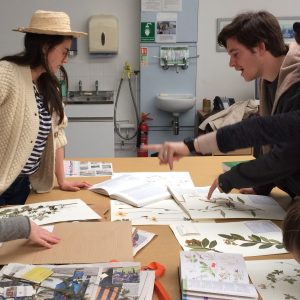 We are pleased to announce that the KEH catalogue, with over 1000 entries, is now available online here. The searchable digital database includes botanical and ethnobotanical information and a photograph. The KEH is the work of dozens of Ethnobotany students and staff that have been collecting voucher specimens for more than 20 years. While predominantly representing the flora of Kent, there are specimens from other parts of the UK and the rest of the world; all are stored in the Ethnobiology Lab at the University of Kent. We are grateful to Mercy Morris and Filippo Zefferi for digitizing the collection, Allen Tullet for creating the website, and Kent’s Division of Human and Social Sciences and the School of Anthropology and Conservation for funding the project. The KEH is now listed on the Index Herbariorum at the New York Botanical Garden, as UKC.
Julien Blanc joins CBCD as Visiting Fellow
Enviro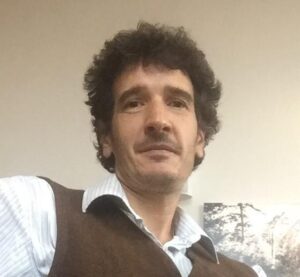 nmental Anthropologist Julien Blanc from the Eco-anthropology Lab at the Musee de L’Homme, Paris, is a Visiting Fellow at the CBCD for 2022-23. He also curates the Ethnobotanical Collections at the Museum of Natural History in Paris, and convenes a Masters progamme on Cultural and Biological Diversity at the MNHN. He will be presenting a talk entitled, Re-opening the relations: French peasants exploring conditions of vivavibility within deep agroecology, in the School of Anthropology and Conservation, December 6th, 2 pm.
New books! Environmental Anthropology and Ethnobiology Series at Berghahn Books
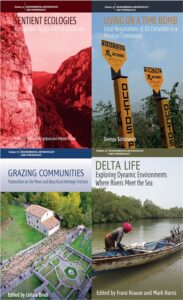 We are pleased to recommend 4 new books from our Series:
Sentient Ecologies: Xenophobic Imaginaries of Landscape. Edited by Alexandra Coțofană and Hikmet Kuran (Vol 31)
Living on a Time Bomb: Local Negotiations of Oil Extraction in a Mexican Community. By Svenja Schöneich (Vol 30)
Grazing Communities: Pastoralism on the Move and Biocultural Heritage Frictions. Edited by Letizia Bindi (Vol 29)
Delta Life: Exploring Dynamic Environments where Rivers Meet the Sea. Edited by Franz Krause and Mark Harris (Vol 28)
Goats and Pastoralists of the Aurunci Mountains: An exhibition in the Museo Virtual Ecologia Humana
 See Dario Novellino’s beautiful exhibition describing the dynamic, contemporary and historical relationships of people, goats and land in Central Italy. Part of the CBCD project Bringing in Pastoralists Voices
Roy Ellen wins Book Award
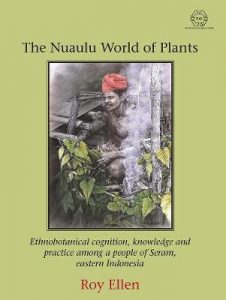 Emeritus Professor Roy Ellen’s 2021 book, The Nuaulu World of Plants. Ethnobotanical Cognition, Knowledge and Practice Among a People of Seram, Eastern Indonesia
(Sean Kingston Publishing), has won the 2022 Mary W. Klinger Book Award given by the Society for Economic Botany for an outstanding book published in the discipline of Economic/Ethno Botany.
The Nuaulu World of Plants is the culmination of Roy Ellen’s anthropological fieldwork on the eastern Indonesian island of Seram, and of comparative enquiries into the bases of human classificatory activity through the study of ethnobiological knowledge over a fifty year period.
A book launch celebrating this, and another book Nature Wars, was held on 28th January, 2021. A recording of the event is available on the RAI YouTube channel.
Past Events ONLINE
Annual Kent-Kew Distinguished Ethnobotanist Lecture 2022
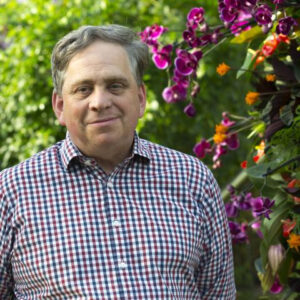 Dr Mark Nesbitt (RBG Kew; Curator of Economic Botany Collections)
Awakening the past: ethnobotany, collections and history
Ethnobotany’s current role can be greatly enhanced when seen in the wider context of historical research.
17.00, Tuesday 11 October 2022, Lady Lisa Sainsbury Lecture Theatre, Royal Botanic Gardens, Kew & online
Recording online: https://www.youtube.com/channel/UCVH9srB1HSlzXqhAQGG7ULA
TEA: Nature, Culture, Society 1650-1850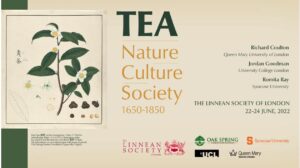
22 – 24 June 2022
The Linnean Society
From tea to teapots; from taste to trade. This meeting will explore natural histories, Chinese porcelain, tea’s impact on literature and more.
Dr Mark Nesbitt (Kew, CBCD Affiliate Staff) and Kent Ethnobotany alum Aurura Prehn (Kew, MOBOT) will present ongoing research on Tea in the Economic Botany Collections held at RBG Kew. (Wed Jun 22nd).
See the Tea History Collection opened May 2021 in Banbury, UK
Just Coca 2022 – Health | Science | People
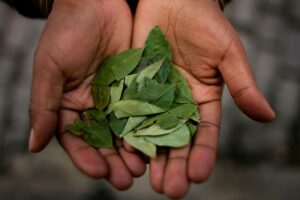
Coca leaf and coca products: uses, safety, medical applications, and regulatory challenges
Recording available at: JUST COCA 2022
Our third in the webinar series People and Psychoactive Plants exploring exisiting stigma and new models of social regulation for psychoactive plants.
Kent-Kew Distinguished Ethnobotanist Lecture 2021
RECORDING HERE
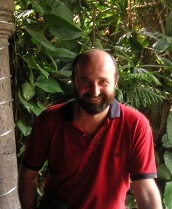 Professor Manuel Pardo-de-Santayana (UAM, Real Jardin Botanique, Madrid)
Protecting traditional botanical knowledge in the era of open science: lessons learned from Spain
A lecture on documenting and preserving traditional botanical knowledge, especially that of wild plant foods and medicines across Spain.
Tuesday 12 October, 2021, Jodrell Lecture Theatre, Kew Gardens. More information here
WEBINAR: People and Psychoactive Plants
Webinar series exploring exisiting stigma and new models of social regulation for tobacco, cannabis, coca, and alcohol.
Just Coca 2022: Health|Science|People
May 18-19, 2022. Website: JUST COCA
From Menace to Medicine: Cannabis in Transition
Panel discussion held April 1st 2021, with special guests led by Dr. Axel Klein Panel, bios and video interviews
Tobacco 15 years after the Framework Convention on Tobacco Control – Global Governance, local stigma
Panel discussions held 30th September and 1st October 2020, with special guests led by Dr. Axel Klein Panel Recordings here
2020 Distinguished Ethnobotanist Lecture
Dr. Ina Vandebroek, The New York Botanical Garden, Caribbean Ethnobotany: Herbs, Health and Heritage Across Borders. Held Ocotboer 13, 2020. Ethnobotany Lecture
Book Launch with Prof Roy Ellen
A bo ok la
ok la unch celebrating two new books from Emeritus Professor Roy Ellen was held on 28th January, 2021.
Nature Wars and The Nuaulu World of Plants
A recording of the event will be available on the RAI YouTube channel.
See our new CBCD YOUTUBE Channel for more content.
For more information please contact Dr Raj Puri (rkp@kent.ac.uk), Director of the Centre for Biocultural Diversity at Kent.